Checklist: Monthly Undercarriage Inspection for Crawler Excavators
A monthly undercarriage inspection prevents costly crawler excavator downtime by identifying track chain, sprocket, and roller wear before it becomes a sudden failure. This audit checklist covers pin clearance, wear gauges, tension, and lubrication for a systematic check.
- Check pin clearance and roller wear with gauges to catch track chain damage before it stops the machine.
- Verify undercarriage tension and alignment to prevent uneven track wear and hydraulic strain.
- Inspect lubrication points and clean debris to extend service life and reduce failure risk.
- Record findings and compare against baseline measurements to track wear trends over time.
- Combine monthly undercarriage checks with daily inspections for consistent protection.
Why monthly undercarriage checks matter
Undercarriage failures stop work fast. A broken track chain, a stripped sprocket, or a seized roller can take a crawler excavator offline for days. These components carry the full weight of the machine and take repeated impact from digging, grading, and transport. A monthly undercarriage inspection catches wear before it becomes an emergency.
This checklist assumes the machine has operated for a few months since the last major service. It targets the same points a mechanic checks after a shift, but with more depth: pin gaps, roller bores, sprocket teeth, and tension. The goal is to find a loose pin or a worn shoe early, not after a chain jump.
What you need before starting
Gather a wear gauge set, a feeler gauge, a torque wrench, a flashlight, a stiff brush, and a clean rag. Bring a measuring tape for track length and a notebook or tablet for photos. If the site is dusty, cover the work area with a tarp to keep debris off the tracks.
Wear safety gear. The machine must be parked on firm, level ground with the tracks locked. Lower the bucket to the ground and engage the parking brake. Disconnect the battery or remove the key if you will work near the tracks.
Track chain and rollers
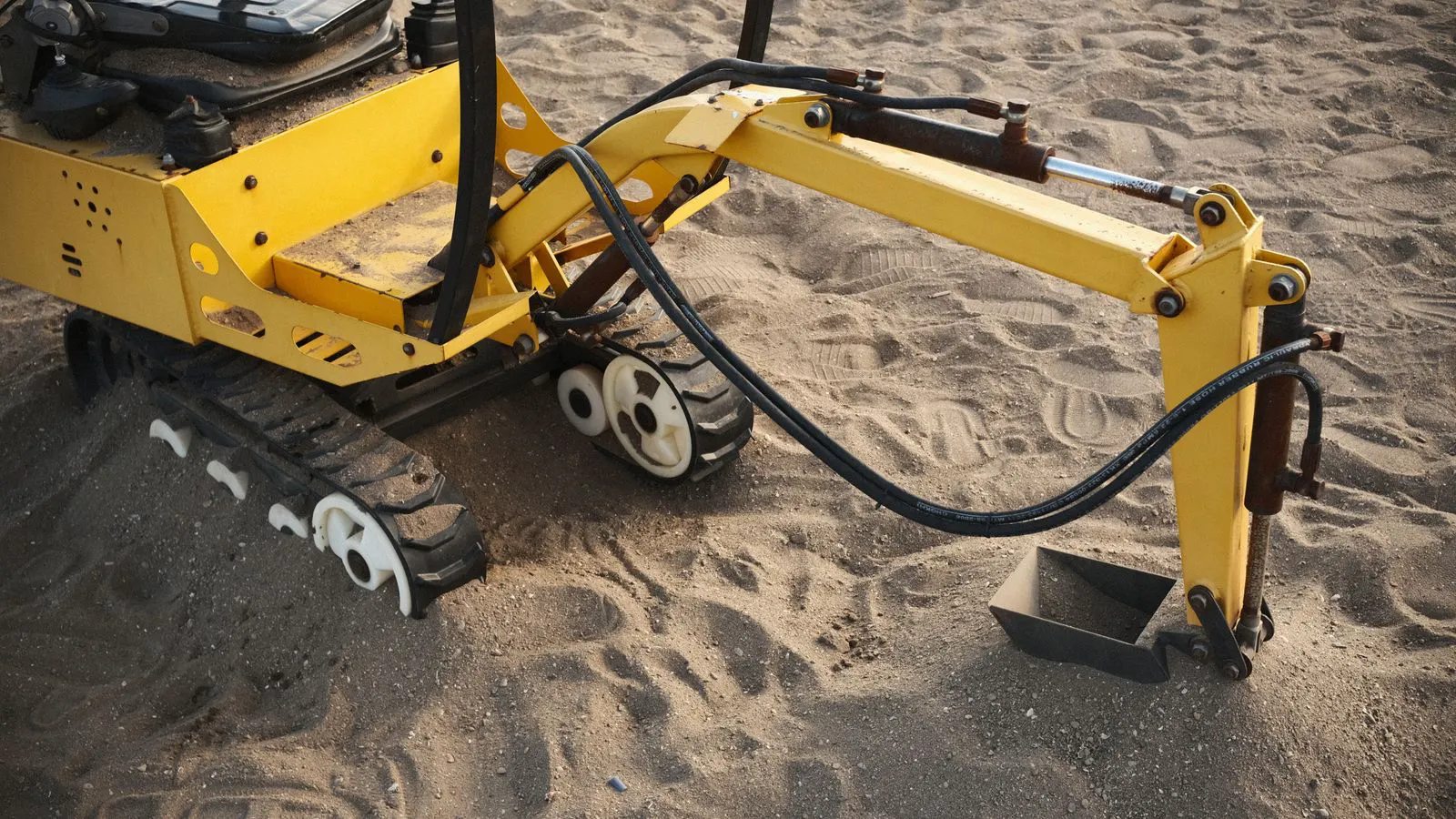
Start at the rear of the track. The rear roller group takes the most stress. Look for:
- Pin clearance between the bushing and the pin. A fresh set allows a small amount of play. As wear progresses, the gap widens. If the gap feels large, the chain is stretched.
- Roller wear. Rollers are cylindrical and rotate on bores. Check the outer surface for flat spots, gouges, or shiny metal. Flat rollers indicate bearing failure or contamination.
- Roller end caps. These retain the rollers in the frame. If a cap is loose, the roller can shift and damage the track.
- Track links. Inspect each link for cracks, bent pins, or worn shoes. The shoe is the contact surface that rides on the ground.
Measure pin clearance at each major joint. If the gauge shows more than the manufacturer tolerance, mark the chain for repair. A single worn pin can spread damage to neighboring links if ignored.
| Component | What to look for | Typical red flag |
|---|---|---|
| Track pin | Clearance between pin and bushing | Gap larger than gauge tolerance |
| Roller | Outer surface wear and flat spots | Shiny metal or gouges |
| Roller end cap | Tightness and position | Loose or missing cap |
| Track shoe | Cracks and uneven wear | Deep cuts or broken edges |
| Sprocket teeth | Profile and wear | Hooked or pointed teeth |
| Idler roller | Rotation and free movement | Grinding or stuck bearing |
Sprocket and idler inspection
The sprocket drives the chain. Its teeth engage the chain links. Wear here is expensive because the sprocket is heavy and takes time to replace.
Check the sprocket teeth for:
- Hooked or pointed shapes. A healthy tooth has a smooth, rounded profile. A hooked tooth indicates the chain is skipping or the sprocket is worn.
- Uneven wear. One side of the sprocket may wear faster if the track is misaligned.
- Cracks near the teeth. Stress cracks can appear near the root of the teeth, especially on machines that work in rocky terrain.
The idler roller holds the top of the track against the frame. It should rotate freely. Turn it by hand. If it resists, the bearing is failing. A stuck idler creates heat and can warp the track frame.
Tension and alignment
Track tension affects everything. Too tight, and the chain strains the hydraulic cylinder. Too loose, and the chain skips on the sprocket.
Check tension by measuring the deflection of the top of the track. Push down on the top run of the track and measure how far it moves. Compare to the baseline. If the deflection is outside the expected range, adjust the tensioner.
Also check alignment. The tracks should sit straight on the frame. If one side is higher than the other, the machine may be walking to one side. This causes uneven wear on the rollers and the frame.
Lubrication and contamination
Debris is the enemy of the undercarriage. Mud, rocks, and sand get into pin joints, roller bores, and sprocket teeth.
Clean the tracks before the inspection. Use a stiff brush or a low-pressure water jet. Do not use a high-pressure jet near the hydraulic lines or seals. Water can force its way into the pin bores.
Check the lubrication points. The track pins and roller bores need grease. If the grease is dry or contaminated, the parts will wear faster. Use the correct grease type for your machine. Overgreasing can force grease into the track frame and attract dirt.
Look for grease leaks. If you see fresh grease on the ground, the seals are failing. A small leak now becomes a seized pin later.
Documentation and follow-up
Write down every measurement. Take photos of worn parts. A photo of a hooked sprocket tooth or a loose pin cap gives you proof for the service order.
Compare the current readings to the last inspection. If the wear is increasing, schedule a repair before the next heavy work cycle. If the wear is stable, the machine is within its service interval.
A monthly undercarriage inspection does not replace the daily checks. The daily inspection covers leaks, obvious damage, and loose fittings. The monthly check goes deeper into the wear points that build up slowly.
Common mistakes to avoid
- Skipping the pin clearance check. Pin wear is gradual, and a loose pin can throw the chain.
- Ignoring small cracks in the track shoes. A small crack can grow into a broken link.
- Over-tightening the track. Excess tension strains the hydraulic cylinder and the frame.
- Using the wrong grease. The wrong grease can harden or wash out, causing premature wear.
- Not cleaning the tracks. Dirt in the pin joints causes scoring and bore wear.
- Waiting for a failure. The cost of a repair is lower than the cost of downtime.
When to call a technician
Some items are beyond a routine check. If the sprocket teeth are badly hooked, the frame is bent, or the track is jumping, stop and call a technician. A bent frame can damage the hydraulic system and the track. A jumping track can break the chain and take the machine out of service.
If you find a cracked track link, do not run the machine. A cracked link can snap under load. Replace it before the next shift.
Keeping the checklist current
The checklist should grow as you learn your machine. After a few months of use, you will know how your excavator wears. A machine that works in clay may wear the shoes differently than one that works in gravel. Adjust your tolerance ranges based on your site conditions.
Keep the checklist with the machine log. A log that shows the wear trend over time is useful when you need to justify a repair or plan a replacement. It also helps when you buy or sell the machine. A well-documented undercarriage history adds value.
The undercarriage is the part of the machine that touches the ground. It takes the most abuse. A monthly undercarriage inspection is a small investment that keeps the machine moving and prevents the big surprises. Use the checklist. Measure. Record. Act.
Frequently asked questions
How often should I inspect the undercarriage?
Perform a daily visual check for leaks and damage. Conduct a full monthly undercarriage inspection with gauges and measurements.
What is the most common cause of track chain failure?
Pin and bushing wear. As the joint loosens, the chain stretches and skips on the sprocket, leading to a chain jump or break.
Can I adjust track tension myself?
Yes, if you know the baseline deflection and the adjustment procedure for your machine. Use the correct torque settings for the tensioner.
What should I do if I find a loose roller end cap?
Stop using the machine. A loose cap can allow the roller to shift and damage the track. Tighten or replace the cap before the next shift.
Does daily inspection replace the monthly check?
No. The daily inspection covers obvious issues like leaks and visible damage. The monthly check uses gauges to measure wear on pins, rollers, and sprockets.