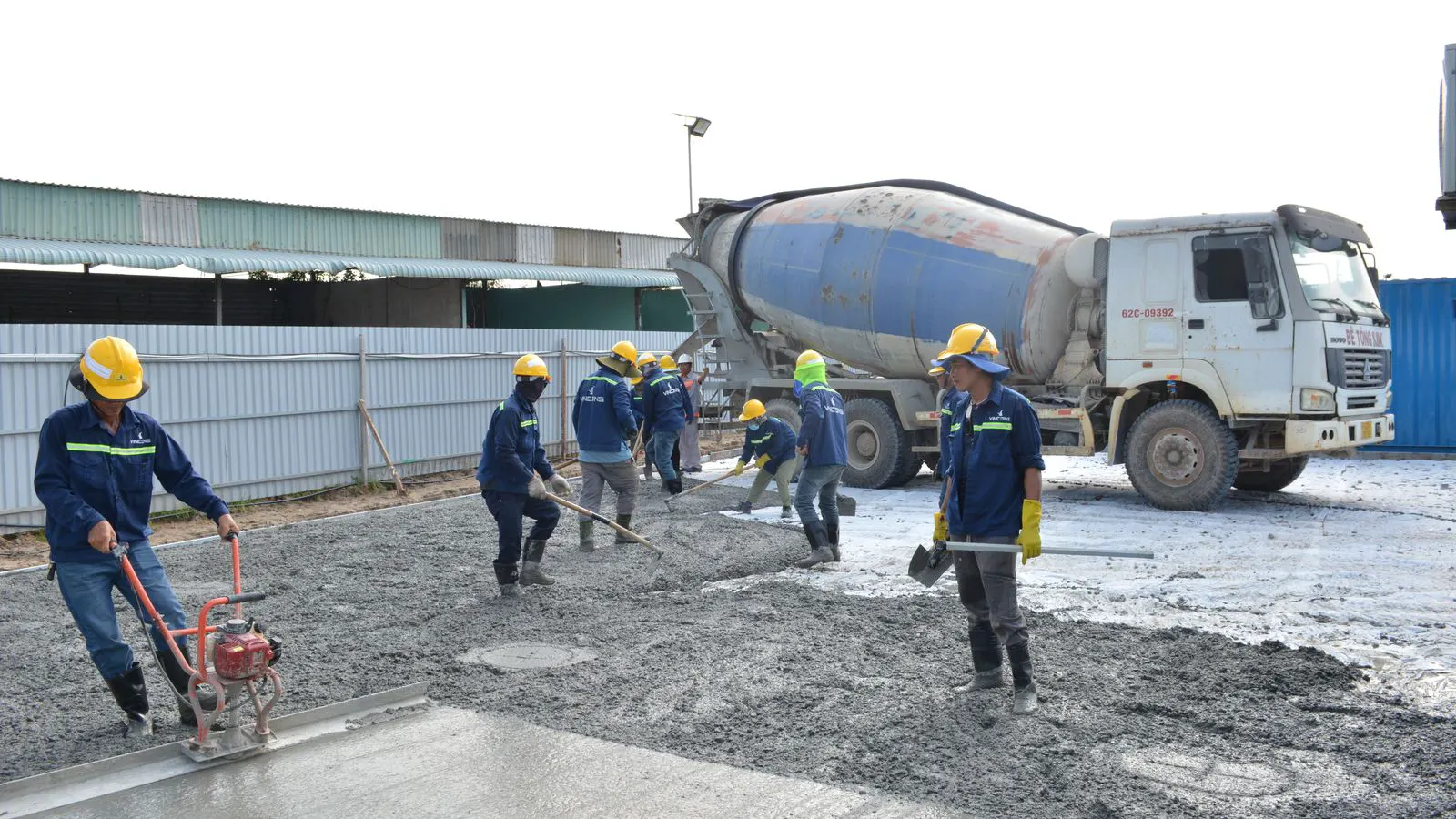
Explainer: Batch Plant vs On-Site Concrete Mixers

A batch plant produces concrete off-site and delivers it by truck, while on-site mixing prepares concrete directly at the project. The choice between off-site batching and on-site mixing depends on volume, transport limits, and mix design requirements.
- A batch plant centralizes production and delivers finished concrete to the site by truck.
- On-site mixing keeps the mixer on the project, reducing transport but increasing site complexity.
- Mix design consistency is easier to control at a batch plant.
- Logistics, transport limits, and site access drive the decision between the two methods.
- Hybrid setups use off-site batching for bulk work and on-site mixing for small or remote tasks.
What is a batch plant and how does it work
A batch plant is an off-site facility where aggregate, cement, admixtures, and water are measured and mixed in large drums. The plant weighs each component before charging the drum, which supports repeatable mix designs. Concrete is discharged into a mixer truck, which transports it to the project.
The core advantage is scale. A plant can handle multiple trucks per hour and maintain consistent output over long production runs. This makes it suitable for large structural pours, slabs, and foundation work. The site receives ready-mix concrete and does not need to store cement, aggregate, or water.
A typical batch plant includes feed hoppers for aggregate, cement silos, a mixing drum, a discharge chute, and a weighing system. Operators monitor the recipe and adjust water content if ambient conditions change. Quality checks are performed before the truck leaves the plant.
How on-site mixing works
On-site mixing places the concrete mixer directly at the construction project. Aggregate, cement, and water are delivered to the site and loaded into the drum. The mixer operates continuously or intermittently depending on the pour schedule.
This method removes the need for a mixer truck. The concrete is made where it is used, which simplifies logistics for small jobs or hard-to-reach areas. However, the site must have space for the mixer, material storage, and a reliable water source.
On-site mixing also introduces more variables. Dust control, noise, and material handling all happen on the project. If the pour is large, the site becomes congested with material trucks and the mixer. If the pour is small, the mixer may sit idle for long periods.
How the two methods compare
The table below shows the main operational differences between a batch plant and on-site mixing.
| Factor | Batch Plant | On-Site Mixing |
|---|---|---|
| Location | Off-site facility | Construction site |
| Transport | Mixer truck | No truck needed |
| Mix consistency | High, controlled at plant | Variable, depends on site |
| Space needed | Minimal on site | Significant on site |
| Setup time | Low on site | Moderate to high on site |
| Best for | Large pours, long production | Small jobs, remote sites |
A batch plant gives the project team a clean delivery point. The site focuses on placement and finishing. On-site mixing gives the project team direct control over the mix at the point of use. The trade-off is that the site carries more operational responsibility.
How sourcing decisions are affected
Sourcing depends on the project type and the logistics of the location. A high-rise slab or a long foundation pour usually favors a batch plant. The volume is steady, and the site needs a predictable flow of ready-mix concrete. The plant schedules trucks to match the pour sequence.
A small building or a remote access road may favor on-site mixing. The volume is low, and the site may not have reliable access for a mixer truck. The project team can bring a portable mixer and prepare small batches as needed.
There is also a cost factor. A batch plant charges for the delivered concrete. On-site mixing charges for the materials and the operator or crew. The site must account for fuel, water, and labor. In some cases, a hybrid approach works best. The team uses a batch plant for the main structural work and keeps a small mixer on site for repairs or small pours.
How transport limits shape the choice
Mixer trucks have a maximum load. A truck cannot carry an unlimited amount of concrete. If the pour is large, multiple trucks are required. The site needs a discharge point that can handle the sequence of trucks.
A batch plant schedules deliveries to match the site’s placement rate. If the site cannot accept a truck quickly, concrete may lose workability before it is placed. On-site mixing avoids this problem because the concrete is made at the point of use. The team can produce a batch, place it, and then produce the next batch.
Transport also affects mix design. A long haul can change the water content if the truck is not sealed properly. On-site mixing avoids transport-related variation. The team can adjust the mix in real time based on the ambient conditions at the site.
A worked example in plain words
A contractor is building a community center with a large slab foundation and a small stairwell. The foundation slab is the main pour. The contractor uses a batch plant for this work. The plant prepares the concrete to the required strength and delivers it by truck. The site crew places the concrete and finishes the slab.
The stairwell is a smaller element, located in a tight space. A mixer truck cannot easily reach the work area. The contractor sets up a small on-site mixer near the stairwell. The team brings aggregate, cement, and water to the site. The mixer prepares small batches for the stairwell.
This hybrid setup matches the logistics to the task. The large pour gets the scale and consistency of a batch plant. The small element gets the flexibility of on-site mixing. The project team avoids over-transporting materials and keeps the site organized.
How to decide for your project
Start with the volume. If the pour is large and continuous, a batch plant is usually the better fit. If the pour is small or intermittent, on-site mixing may be simpler.
Next, check the site access. A mixer truck needs a clear path to the work area. If the site is narrow, congested, or remote, on-site mixing avoids the transport problem.
Then, review the mix design. If the concrete requires a precise recipe, a batch plant gives better control. If the mix is simple and the site conditions are stable, on-site mixing can work well.
Finally, look at the schedule. A batch plant requires advance notice for deliveries. On-site mixing can be started when the crew is ready. The project team should match the production method to the pour schedule and the site constraints.
Common mistakes to avoid
A common mistake is choosing on-site mixing for a large pour without considering site space. The mixer and material storage can block work areas. The crew may struggle to move around the site.
Another mistake is assuming a batch plant can deliver concrete to any location. Access roads, crane height, and discharge points all matter. The site must be ready to receive the truck.
A third mistake is ignoring water supply. On-site mixing needs a steady water source. If the water is unavailable, the pour can stop. The team should confirm water access before starting.
A fourth mistake is mixing methods without a plan. A hybrid setup requires clear communication between the plant and the site crew. The team should agree on delivery times and mix adjustments before production starts.
Frequently asked questions
Can a batch plant deliver concrete to a small site?
Yes, but the truck must fit the site access. If the site is too tight for a mixer truck, on-site mixing is a better fit.
Is on-site mixing always cheaper than using a batch plant?
Not necessarily. On-site mixing requires materials, labor, and equipment on the site. For large pours, a batch plant is often more efficient.
Which method gives better mix consistency?
A batch plant generally provides better consistency because weighing and mixing are centralized. On-site mixing depends more on site handling.
Can I use both methods on the same project?
Yes. Many projects use a batch plant for main pours and on-site mixing for small or remote elements.
How far can a mixer truck travel before concrete quality drops?
Quality depends on the mix design and transport conditions. Longer hauls can increase variation, so the site should confirm the delivery window.