Buyer's Guide: Selecting Vibrating Tables for Slabs
This guide explains how to evaluate concrete vibrating tables for slab work. It covers table size, power source, motor type, and frame stability to help you match equipment to your specific job requirements.
- Match table dimensions to your typical slab area and crew size to balance coverage time and maneuverability.
- Select a power source based on site access, job duration, and the need for consistent vibration without fuel management.
- Prioritize frame stiffness and motor placement to prevent deflection that can leave visible marks in the concrete.
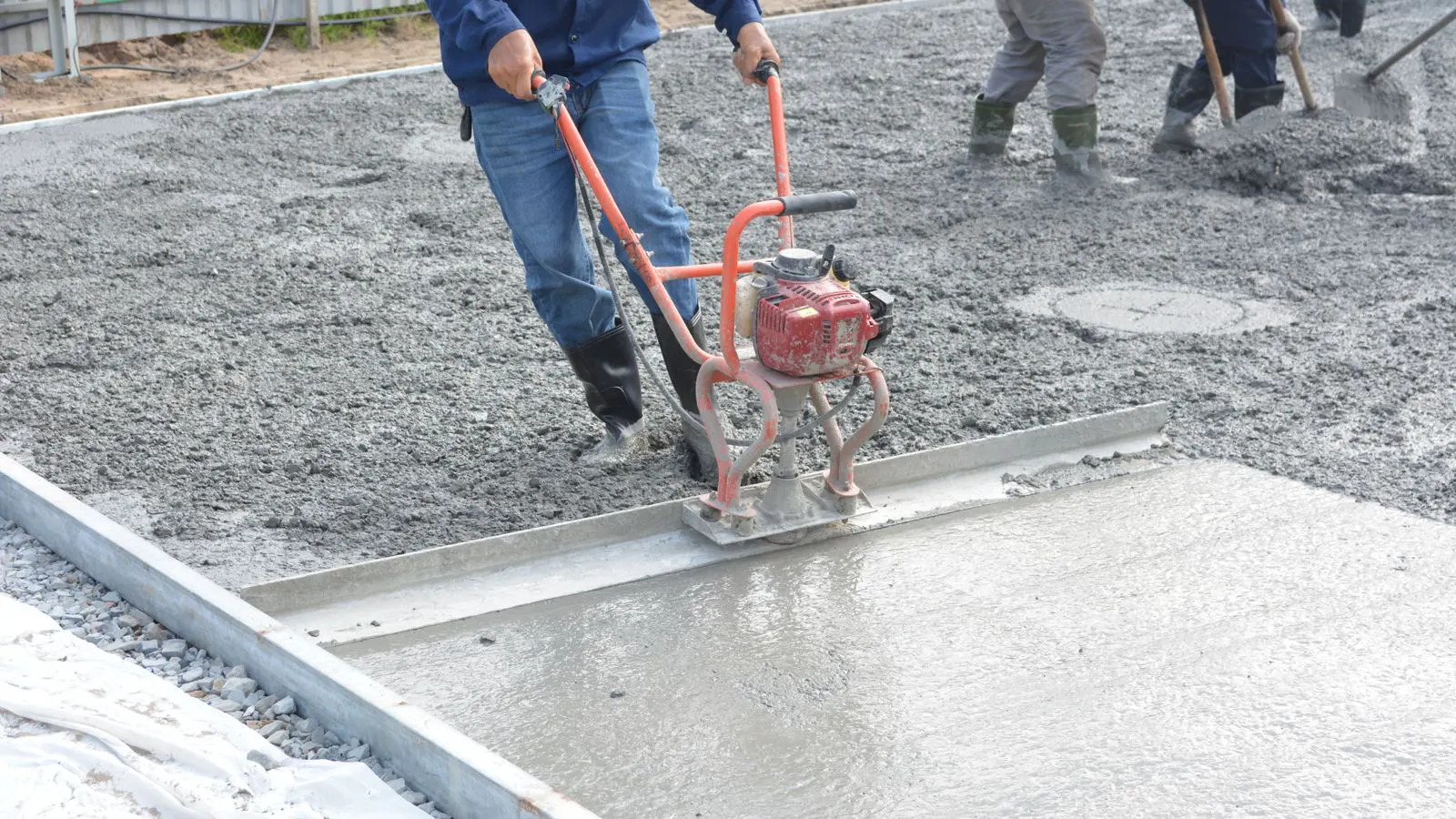
A concrete vibrating table is a horizontal, powered platform that drives vertical oscillations into a wet concrete surface. It is not a substitute for a power trowel. Its job is to force air bubbles to the surface and settle the aggregate before the mix hardens enough to lose workability. Selecting the wrong unit means either spending too long on a small slab, dragging heavy equipment around, or leaving a surface that shows vibration marks and needs extra finishing.
This guide walks through the specific factors that determine which slab vibration equipment fits a particular project.
How to Determine the Correct Table Size
Table size is the first variable. It sets the working radius, the number of passes required, and the physical space the operator needs to move around.
A small table, typically around 2 meters by 2 meters, suits narrow footings, curb lines, or small interior bays. It allows tight maneuvering in congested work zones. The downside is that large open slabs take significantly longer to process. An operator may need to walk and reposition the unit constantly, which increases fatigue and creates seams between vibration zones.
A standard medium table, often in the 2.5 meter to 3 meter range, is the workhorse for most commercial floor slabs. It balances coverage speed with the ability to reach around columns and formwork.
A large table, 3.5 meters or more, is built for wide, open pours. It reduces the number of overlaps needed and speeds up the consolidation process on large pads or foundations. However, it requires a large, unobstructed area and is difficult to maneuver in tight spaces.
Consider the maximum distance from a power source or fuel tank if you are using a non-electric unit. A larger table has a heavier frame, which increases the weight of the power source it must drag or tow.
Power Source Selection and Site Constraints
The power source dictates how you position the unit and how much downtime you might face during a long pour.
Electric units run on site power or a generator. They offer consistent torque and low maintenance. The cable length limits your reach. If the slab is large and the power is at the edge, you may need an extension cord or a second generator. This adds weight and tripping hazards.
Gasoline or diesel units offer mobility. You can place the engine anywhere on the table frame, or tow it with a short tether. This is useful when power access is limited or when working in remote areas. The trade-off is weight and noise. The engine adds significant mass, which can stress the frame if not balanced correctly.
Hydraulic units connect to a mobile power pack. They are less common for small slab tables but appear on larger, specialized equipment. They allow the operator to control vibration frequency and amplitude from a remote panel, which is useful for delicate finishes.
Check the voltage and phase requirements for electric models. A three-phase unit may require a dedicated connection on a job site. A single-phase unit may draw too much current from a standard generator, causing voltage drop and reduced performance.
Motor Type and Vibration Characteristics
The motor inside the table generates the vibration. The type of motor affects noise, starting power, and maintenance.
Standard electric motors are reliable and quiet. They start easily with a button press. The vibration is consistent but fixed. You cannot adjust the frequency. This is usually acceptable for standard concrete.
Inverter motors allow you to vary the speed. You can start at a lower frequency to consolidate the mix without disturbing the aggregate, then increase the frequency to bring bubbles to the surface. This is useful for thick slabs or when working near already-finished edges.
Gas and diesel engines provide high starting torque but are noisier. They require regular oil changes and fuel management. The vibration output is tied to engine RPM, so the frequency changes as the engine idles or revs.
Look for a motor that is sealed against dust and water. Concrete dust is abrasive and can damage bearings. Water ingress is a constant risk on a wet slab. A sealed housing extends the life of the electrical components.
Frame Construction and Structural Stiffness
The frame is the skeleton of the unit. It must be rigid enough to hold the table flat while the motor vibrates.
A flexible frame bends under the force of the motor. This creates a rocking motion rather than a pure vertical vibration. The result is uneven consolidation and visible ripples in the concrete surface.
Check the material. Steel frames are standard and durable. Some lighter units use aluminum, which reduces weight but may not handle the stress of heavy concrete well. Look for a welded frame with gusseted joints.
The legs or supports should be adjustable. Concrete slabs are rarely perfectly level. An adjustable leg prevents the table from rocking on an uneven surface. If the table rocks, the vibration becomes erratic and the operator struggles to maintain contact.
Operator Controls and Safety Features
The controls determine how easy the job is to perform.
A simple on/off switch is adequate for basic work. A foot pedal allows the operator to control vibration while their hands are on the handles, improving balance. An adjustable speed dial gives more control over the consolidation process.
Safety features include a vibration damper that reduces the force transferred to the operator’s arms. A soft-grip handle reduces fatigue. A safety interlock prevents the motor from running if the table is not properly positioned or if the frame is damaged.
Consider the weight of the unit when it is lifted by two people. If the table is too heavy, the crew will struggle to move it between sections. This leads to shortcuts, such as skipping vibration zones or rushing the finish.
Maintenance and Consumables
The maintenance schedule affects the cost of ownership and the availability of the unit.
Electric units require minimal maintenance. Inspect the motor housing for cracks and keep the bearings clean. Check the cables for damage before each use.
Gas and diesel units need routine servicing. Oil changes, air filter cleaning, and spark plug replacement are standard. Keep a spare set of filters on hand. A failed engine on a large slab can stop the entire pour.
Consumables are limited. Some units have wear pads or rubber feet that can be replaced. Check the manufacturer’s parts availability. If a specific part is discontinued, the unit may become difficult to repair.
Criteria for Selection
Use this table to evaluate specific models against your project needs.
| Criterion | What to look for | Why it matters |
|---|---|---|
| Table Area | Match to slab size and access | Determines coverage speed and maneuverability |
| Power Source | Electric, gas, or diesel based on site | Affects mobility, noise, and setup time |
| Frame Stiffness | Welded steel with gussets | Prevents deflection and uneven vibration |
| Motor Type | Sealed, with optional speed control | Ensures durability and consistent performance |
| Weight | Manageable for two-person lift | Reduces crew fatigue and transport time |
| Control Type | Foot pedal or hand switch | Improves operator balance and precision |
| Parts Availability | Common motor and frame parts | Ensures quick repairs during a job |
Decision Checklist
Before you buy, run through these points.
- What is the maximum slab area you will process? Choose a table that covers at least 80% of that area in one pass.
- Where is the power source? If it is more than 20 meters away, consider a gas or diesel unit or a long cable run with a generator.
- What is the concrete thickness? Thick slabs benefit from adjustable frequency. Thin slabs may only need a basic on/off model.
- How many crew members will operate the unit? If it is a two-person job, keep the weight under a manageable level for lifting and moving.
- What is the job site environment? If it is a tight urban site, prioritize a smaller, lighter table. If it is a large open pad, prioritize a larger table with high coverage.
- What is the maintenance plan? Assign a person to check the unit before and after each day. Keep a log of oil changes and part replacements.
- Do you have a backup unit? If one table fails, can you rent a replacement quickly? If not, choose a model with high parts availability.
The right concrete vibrating table is not the most powerful one. It is the one that fits your specific slab, your crew, and your site constraints. Measure the slab, check the power access, and test the weight. A unit that is too big or too heavy creates more problems than it solves. A unit that is just right will finish the slab faster and with less effort.
Frequently asked questions
Can I use a concrete vibrating table on a slab that is already partially set?
No. The concrete must be in a workable state. If it has begun to set, the table will drag and damage the surface. Stop vibrating when the mix is still fluid and the bubbles are still rising.
What is the difference between a vibrating table and a power trowel?
A vibrating table consolidates the concrete and removes air bubbles. A power trowel smooths and finishes the surface after the concrete has set enough to support weight. They are used in sequence, not as substitutes.
How often should I inspect the motor housing?
Before every use. Look for cracks, water ingress, or damaged cables. Concrete dust and water are the main enemies of the motor. A small crack today can become a major failure tomorrow.
Is a larger table always better for big slabs?
Not always. A larger table requires more space to maneuver. If the slab has columns or obstructions, a smaller table may be faster and safer. Match the size to the layout, not just the total area.
Can I use a gas engine on an indoor job site?
Generally, no. Gas engines produce exhaust fumes that are hazardous in enclosed spaces. Use an electric unit for indoor work. If you must use a gas unit indoors, ensure adequate ventilation and follow local safety regulations.