Troubleshooting: Concrete Pump Nozzle Clogging and Wear
A clogged or worn concrete pump nozzle causes pressure spikes, weak placement, and hose damage. This guide lists common symptoms, likely causes, and field fixes, plus prevention steps to extend service life and reduce downtime on active pours.
- Check nozzle tip geometry and flow pattern before blaming the pump or hose assembly.
- Use the right tip size for the mix, hose, and desired placement distance.
- Flush the line with water and inspect the tip after every pour, not just when a problem appears.
- Replace worn tips early to protect the hose, couplings, and pump.
- Keep a simple log of tip changes, mix types, and hose pressure to catch wear early.
What a clogged nozzle tip actually looks like
A concrete pump nozzle clogging problem usually shows up as a weak stream, erratic flow, or a sudden pressure jump. The tip may also spatter, spray sideways, or deposit a cone of concrete in the trench instead of a controlled line. If the placement hose clogging appears only at the tip, the blockage is often in the nozzle itself. If the hose feels firm along its length, the restriction is upstream.
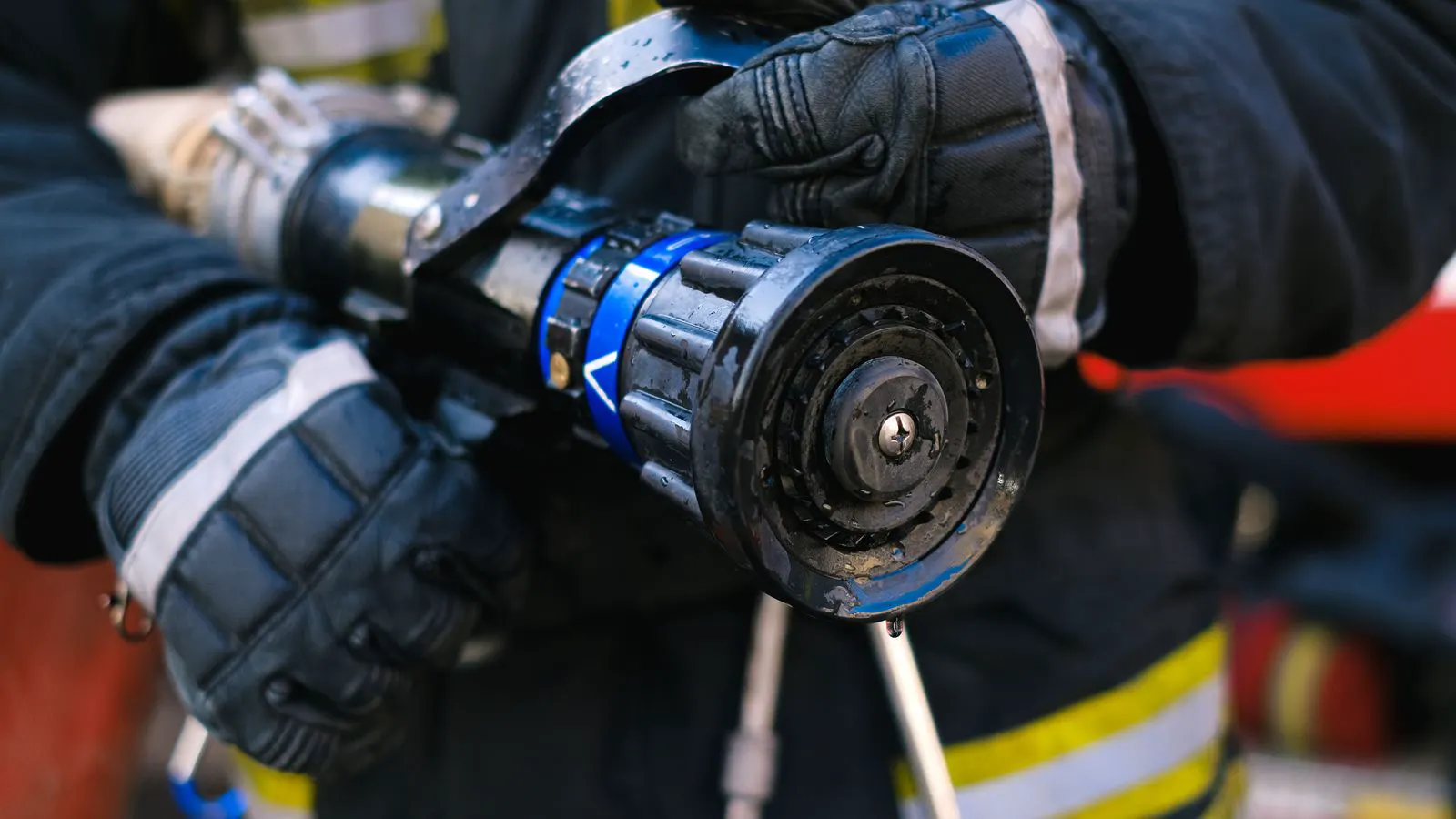
The concrete pump nozzle is the part that converts pump pressure into a shaped stream. It is also the first part to wear from abrasive mix, stone, and vibration. A worn tip changes the flow pattern quickly. What starts as a minor spatter can become a clog or a damaged hose coupling.
Start at the tip. Remove the nozzle, inspect the bore, and look for hardened concrete, chips, or a flattened outlet. Then trace the problem back through the placement hose and couplings.
Common symptoms and likely causes
The table below covers the most frequent issues field crews report. Use it to separate a tip problem from a hose or pump problem.
| Symptom | Likely cause | What to do |
|---|---|---|
| Weak or intermittent stream | Partial clog in nozzle bore or tip | Remove tip, flush with water, inspect bore and outlet, replace if worn |
| Sudden pressure spike | Full blockage at tip or upstream restriction | Stop pump, relieve pressure, clear tip, check hose couplings and suction line |
| Spatter or side spray | Worn or damaged tip edge, wrong tip size | Replace tip, confirm tip matches mix and hose, recheck coupling torque |
| Cone or pile at trench bottom | Tip too small, wrong flow pattern, or worn outlet | Increase tip size or use a different pattern, replace tip, check hose condition |
| Hose feels firm or kinked | Blockage upstream of tip, kink, or collapsed hose | Inspect placement line for kinks, flush line, replace damaged hose section |
| Rapid wear on one side of tip | Misaligned coupling, bent tip, or abrasive stone | Check coupling alignment, replace bent or cracked tip, inspect stone content in mix |
If the symptom is a single weak pour, flush the tip. If the pressure spike repeats, stop and isolate the line. A clog that is not fully cleared can damage the pump.
How to clear a nozzle clog without damaging the pump
Clearing a tip clog is usually simple, but the sequence matters. Never force the hose while the pump is running. Never use a sharp tool inside the bore while pressure is present.
- Stop the pump and close the pump valve or isolate the pump from the line.
- Relieve any remaining pressure in the hose. Let the line drain if possible.
- Remove the nozzle tip and any quick-connect couplings at the end of the hose.
- Flush the tip with water from the pump side. If the blockage is concrete, use a stiff brush or a wooden pick, not metal that can score the bore.
- Inspect the tip bore, outlet, and threads. Look for hardened patches, chips, or a flattened edge.
- Reconnect the tip and run the pump at low speed with water or a thin mix to confirm flow.
- If the stream is still weak, move upstream. Check the last hose coupling, then the hose itself for kinks or internal buildup.
If the tip is worn, replacing it is usually cheaper than repairing the hose or pump. A damaged tip can also let concrete enter the hose coupling and cause a leak under pressure.
What causes premature nozzle wear
Nozzle wear is not random. It follows the mix, the hose, and the placement method. A concrete pump nozzle wears faster when the mix is abrasive, when the tip is oversized for the pressure, or when the hose is kinked near the tip.
Common wear patterns include:
- A flattened outlet: usually from overpressure or a tip that is too small for the flow.
- A rough or scored bore: usually from stone or poor flushing.
- A worn thread: usually from repeated removal and reinstallation without cleaning.
- A cracked or chipped edge: usually from impact, frozen concrete, or a bent hose.
- A side-wear pattern: usually from a misaligned coupling or a hose that rubs against the tip.
The mix is a major factor. High stone content, high slump, or poorly graded aggregate can accelerate wear. A pump that is run at high pressure with a small tip will wear the tip faster than the same pump with a larger tip at lower pressure.
Matching the tip to the job
The tip is not a fixed part. It is a tool. The right tip size and pattern depend on the mix, the hose length, the placement distance, and the formwork.
A small tip gives a tighter stream but requires higher pressure. It is useful for short distances, tight formwork, and high-strength mix. A large tip gives a wider stream and lower pressure. It is useful for longer distances, wide formwork, and lower-strength mix.
If the tip is too small, the pressure rises and the tip wears faster. If the tip is too large, the stream may not reach the formwork or may spread too wide. The hose and pump are only as good as the tip selection.
Check the tip before every pour. Look for wear, damage, and fit. Confirm the tip is the right size for the mix and the hose. A quick tip check saves a long pour.
Maintenance habits that extend nozzle life
The goal is not to avoid wear, but to manage it. A concrete pump nozzle will wear. The question is how fast.
- Flush the line with water after every pour. Do not let concrete dry in the tip.
- Inspect the tip after each pour, not only when a problem appears.
- Keep a spool of replacement tips on the truck. A worn tip should be replaced before it damages the hose.
- Store the hose in a way that prevents kinks, especially near the tip.
- Clean the threads before reconnection. Hardened concrete on the threads causes leaks and uneven pressure.
- Log tip changes. Note the mix type, pressure, and hose length. This helps you spot a pattern before it becomes a failure.
A simple log does not need to be complicated. A notebook or a phone note is enough. The goal is to know when a tip is wearing too fast and why.
When to replace the tip, not just clean it
Cleaning fixes a blockage. Replacement fixes wear. A tip that is chipped, scored, or flattened will not return to spec after cleaning. If the outlet is not round, or if the bore is rough, replace the tip.
A worn tip can also cause a hose leak at the coupling. The pressure may force concrete into the gap. This is a small leak that becomes a big one under pressure. Replacing the tip is usually faster and cheaper than repairing the hose.
If the tip is replaced often, the problem is likely upstream. Check the mix, the hose, the pump pressure, and the tip size. A pattern of rapid wear is a signal to change the method, not just the part.
How to prevent placement hose clogging
The hose is part of the nozzle system. Clogging in the hose is usually caused by the same things that clog the tip: concrete drying, stone, or a kink.
To reduce placement hose clogging:
- Flush the hose with water after every pour.
- Inspect the hose for kinks, cracks, and internal buildup.
- Keep the hose clean and dry when not in use.
- Use the right hose for the pressure and mix.
- Do not run the hose dry. A dry hose is a clogged hose.
A clean hose is a reliable hose. The tip and the hose work together. If one is compromised, the other takes the damage.
Quick checks before the next pour
Before starting a pour, take two minutes to check the nozzle and hose. These checks prevent most clogging and wear problems.
- Remove the tip and look inside the bore.
- Check the outlet edge for chips or flattening.
- Confirm the tip size matches the mix and hose.
- Check the hose for kinks and leaks.
- Flush the line with water.
- Run the pump at low speed to confirm a steady stream.
These checks are not optional. They are part of the placement process. A clogged tip or a worn tip can stop a pour and delay a project.
How to read the pressure gauge
The pressure gauge gives a clue about the tip and hose. A steady pressure is normal. A pressure that rises and falls is a sign of a partial clog. A pressure that spikes is a sign of a full clog or an upstream restriction.
If the pressure rises when the tip is removed, the problem is likely in the hose or pump. If the pressure is normal when the tip is removed but high when the tip is connected, the tip is the cause.
The gauge is a tool. Use it to isolate the problem. Do not rely on feel alone.
What to do if the problem returns
If the clog or wear returns after a fix, the root cause is still there. Do not repeat the same fix.
- If the clog returns after cleaning, check the mix and the hose.
- If the wear returns after replacement, check the tip size and the pressure.
- If the leak returns after tip replacement, check the coupling and the hose.
A repeat problem is a signal. Change one variable at a time and see what happens.
Final note
A concrete pump nozzle is a simple part, but it carries a lot of the load. It shapes the stream, protects the hose, and affects the pump. Treat it as a working part, not a fixed part. Inspect it, clean it, replace it when needed, and log the changes. The pour will be smoother and the equipment will last longer.
Frequently asked questions
How do I tell if the clog is in the nozzle or the hose?
Remove the tip and check the pressure gauge. If the pressure is high with the tip on and normal with the tip off, the tip is the cause. If the pressure is high with the tip off, the problem is upstream in the hose or pump.
Can I use a metal tool to clear a clogged nozzle?
Avoid sharp metal tools. They can score the bore and cause leaks or uneven flow. Use a stiff brush, a wooden pick, or water pressure to clear concrete.
How often should I inspect the nozzle tip?
After every pour. A quick visual check and a flush are enough. Replace the tip if the bore is rough, the outlet is flattened, or the threads are damaged.
What tip size should I use for high-strength concrete?
Use a smaller tip for high-strength mix. It gives a tighter stream and requires higher pressure. Confirm the tip size matches the hose length and placement distance.
Is it normal for the nozzle tip to wear after a few pours?
Some wear is normal. Rapid wear is not. If the tip wears quickly, check the mix, the pressure, and the tip size. A worn tip can damage the hose and pump.