Checklist: Mobile Crane Setup and Ground Bearing Checks
A safe mobile crane lift depends on verified outrigger placement, level ground, and adequate bearing capacity. Use this checklist to inspect outrigger pads, ground conditions, boom angle, and load charts before lifting. If the ground is soft or the crane is not level, stop and address the issue before proceeding.
- Verify ground bearing capacity before extending outriggers. Soft or saturated ground requires larger bearing plates.
- Check crane levelness and outrigger contact. Uneven or partially loaded outriggers create tipping risks.
- Match boom length, radius, and angle to the rated load chart. Never exceed the chart for the current configuration.
- Inspect rigging, slings, and hook blocks. A failed rigging connection is as dangerous as a crane tip.
- Keep a lift plan in place and brief the crew. Clear communication prevents miscommunication during the lift.
What to Check Before Extending Outriggers
A mobile crane setup begins long before the boom reaches the load. The first failure points are almost always on the ground. If the crane sits on uneven terrain, the outrigger legs bear uneven loads. If the ground is soft, the pads sink. Either condition reduces the stability margin and can cause a tilt that exceeds the manufacturer’s safe limits.
Start at the site access. Verify that the truck can reach the lift point without cutting corners or using a slope. If the approach is tight, the crane may need to be positioned at an angle. An angled setup changes the boom radius and load capacity. Consider the turning radius of the truck cab as well as the outrigger footprint. If the truck cannot square up to the lift point, the boom will have a shorter effective radius in one direction and a longer one in the other. This asymmetry must be reflected in the lift plan.
Check the lift plan before touching the controls. The plan should state the load weight, rigging weight, boom length, and radius. It should also list the outrigger pad size and the ground bearing assumptions. If the plan is missing or vague, stop. A crew that guesses a radius or load weight does not have a safe setup. The plan serves as the single source of truth for the operation. If the plan says 20 tonnes and the load tag says 22 tonnes, the plan must be updated before the boom extends.
Walk the lift perimeter. Look for underground utilities, trenches, overhead lines, and other equipment. A mobile crane can swing a boom over a live power line or strike a structure. Mark the swing radius on the ground with cones or tape if the area is active. Do not rely on the boom’s visual sweep alone. The counterweight and the truck chassis also occupy space. If the swing path intersects a rebar cage or a temporary support, reroute the lift or reposition the crane.
Ground Bearing Conditions and Outrigger Pads
Ground bearing is the capacity of the soil to support the crane without excessive settlement. Typical site soil varies from firm gravel to soft clay to saturated sand. The crane manufacturer’s manual usually provides a pressure limit, but site conditions often require field judgment. Pressure is force divided by area. This is why outrigger pad size matters so much. Doubling the pad area halves the ground pressure.
Look at the soil first. Firm, compacted gravel or concrete supports most mobile cranes. Soft, loose, or recently disturbed soil needs more caution. If rain has saturated the ground, the bearing capacity drops sharply. A pad that looked solid yesterday may not hold today. Check the soil at the pad locations, not just at the truck entry point. Soil conditions can change over a few meters.
Outrigger pads are the interface between the leg and the ground. Use the correct size for the load. Larger pads spread the load over a bigger area. If the pads are too small, the soil compresses and the crane tilts. If the pads are not level, the crane body tilts in the same direction. Select pads based on the load chart, not on what is in the truck bed. A standard pad may be fine for a light lift but inadequate for a heavy one at the same radius.
Place outrigger pads on a stable base. A wooden beam, steel plate, or concrete pad helps if the ground is soft. Do not place a pad on top of a loose pile of gravel or a shallow trench cover. The beam must be level and extend past the pad edge if possible. If using timber beams, lay them across the pad and perpendicular to the load direction if feasible. This distributes the load more evenly and prevents the pad from tilting on its own.
Level and Outrigger Contact Checks
A mobile crane must be level for safe lifting. The boom is designed to work within a specific body angle. If the crane tilts, the effective radius changes and the load rating drops. A two percent tilt can shift the center of gravity far enough to reduce the safe load by a significant margin.
Use the onboard level or a surveyor’s level to check the crane. Many mobile cranes have a bubble level on the cab. Check both axes. A crane can be level fore-and-aft but tilted side-to-side. Both must be within tolerance. Do not trust the visual impression of the boom. The boom is long and slender, and small body angles are hard to see from the ground.
Check that each outrigger pad is in full contact with the ground. A pad that is not fully seated on the ground creates a pivot point. If one leg is not loaded, the crane can tip toward that side. Tap each pad with a steel bar or check for gaps with a straightedge. If a pad is rocking, lift it and adjust the ground or use a shim. Never shim with a thin piece of wood that will compress under load.
Verify the outrigger extension length. Extend each leg to the correct distance for the lift. Shorter outrigger lengths reduce the stability base. Longer lengths increase the base but may not be possible on the site. If the outriggers cannot be fully extended, consult the load chart for the reduced capacity at that configuration. Some charts provide separate columns for partial outrigger extension. Do not extrapolate from the full extension values.
Load Chart and Boom Configuration
The load chart is the legal and engineering limit for the lift. It shows the maximum safe load for a specific boom length, boom angle, and radius. The chart is not a target. It is a ceiling. Exceeding it voids the safety margin and invites a structural failure or a tip-over.
Match the boom length to the lift. A longer boom reaches farther but reduces capacity. A shorter boom is stronger but has a smaller radius. Choose the shortest boom that reaches the load. If the load is within reach of a mid-length boom, do not use the longest boom. Every meter of added boom length reduces the capacity at the same radius.
Measure the radius. The radius is the horizontal distance from the center of the crane rotation to the center of the load. A crew that guesses the radius often overloads the crane. Use a tape measure or laser distance meter. Measure from the center of the turntable, not from the edge of the chassis. If the load is not directly under the boom tip, the effective radius is shorter, but the load is also further from the centerline. Always use the actual geometry.
Check the boom angle. Some cranes use a fixed angle, others use a variable angle. The load chart usually has separate columns for each angle. A crane that uses the wrong angle will not know its own limit. If the boom is raised to a steeper angle, the radius decreases and the capacity increases. If the boom is lowered, the radius increases and the capacity drops. Confirm the angle matches the chart column being used.
Rigging and Load Inspection
The crane is only one part of the lift. The load and rigging system must be verified before the hook moves. A crane tip is a bad day. A falling load is a bad week. Inspect every component that will carry the load.
Inspect slings, shackles, and chains. Look for cracks, elongation, deformation, and corrosion. A sling that has been kinked or over-loaded should be removed from service. A shackle with a bent pin or a cracked body is a stop-lift item. Do not repair shackles in the field. Replace them. Chains should be free of twisted links or stretched segments. If the chain has been heated or welded, it is no longer safe for lifting.
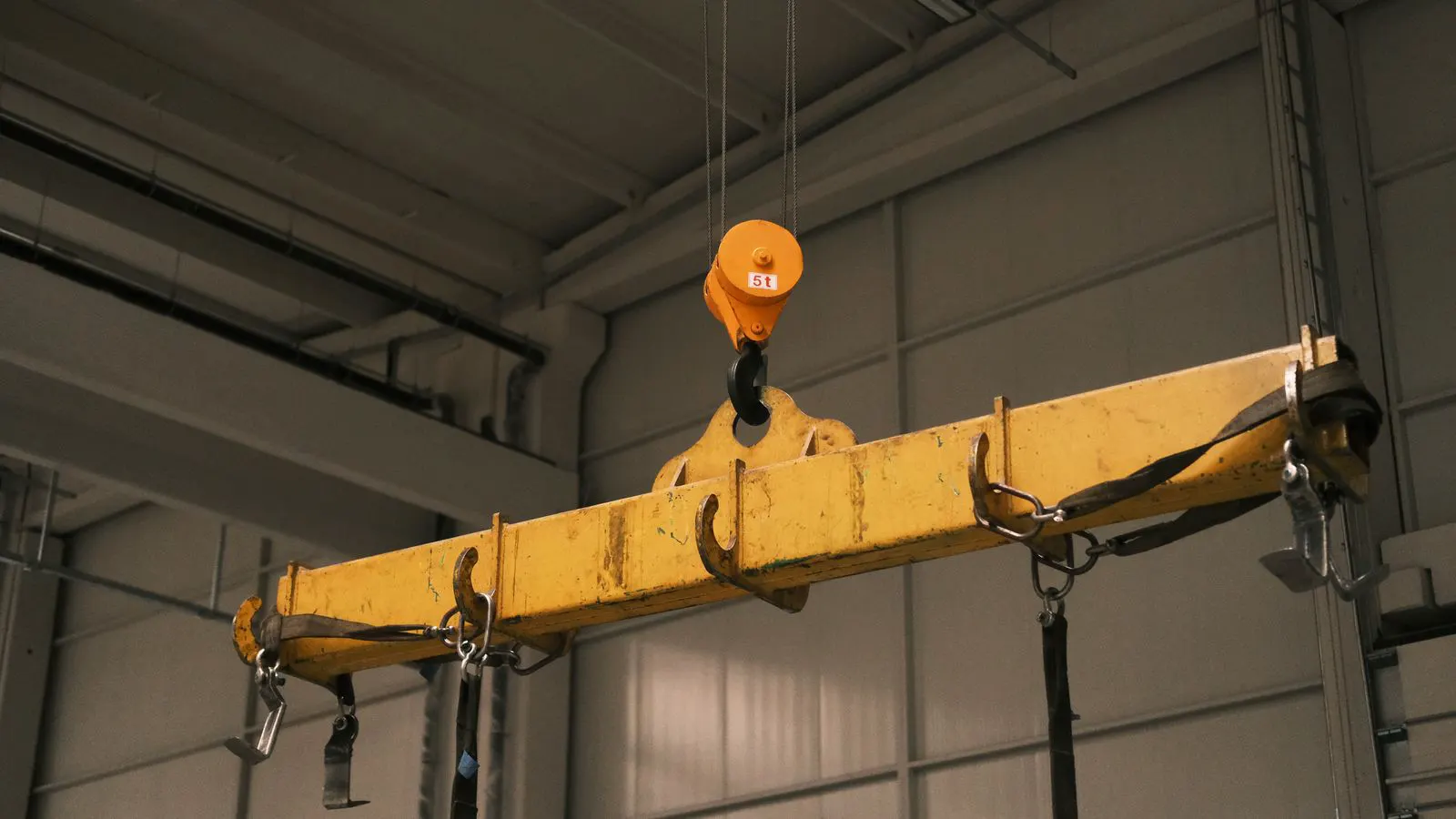
Check the hook block. The hook should close fully. The latch should hold. The block should rotate freely. Do not lift with a hook that is damaged or missing a latch. The latch is the primary retention device. Without it, the hook can open and drop the load. Check the wire rope in the block as well. Look for broken strands, corrosion, or oil contamination.
Verify the load weight. If the load weight is unknown, estimate it conservatively. Add rigging weight to the load weight. The total is the weight the crane must carry. If the total exceeds the load chart, do not lift. Use a certified weight plate or a scale if the load is not tagged. Do not rely on the driver’s guess. A small error in load weight can be the difference between a safe lift and a critical overload.
Crew Communication and Lift Control
A mobile crane lift is a team operation. The operator, rigger, signal person, and spotter all have specific roles. If the roles are unclear, the lift is not ready. Assign a dedicated signal person before the boom extends. This person controls the crane and communicates with the operator. The operator does not guess the direction. The signal person gives clear commands.
Establish a communication method. Hand signals are standard, but a radio or two-way system can be used if the crew has agreed on the protocol. If the signal person is not visible, stop. The operator must have a clear line of sight to the signal person at all times. If the signal person is obscured by the load or the boom, the lift is not safe.
Set the lift limits. The signal person should know the boom length, radius, and load weight. The operator should know the load chart limit. If either person is unsure, stop. The signal person must be able to call out the weight and the radius before the load is lifted. This confirmation step catches errors before they become dangerous.
Red Flags That Require a Stop
Some conditions are not debatable. If they are present, the lift is not safe.
- Ground is soft, saturated, or unstable.
- Outrigger pads are not level or not in full contact.
- Crane is not level within tolerance.
- Load weight is unknown or exceeds the chart.
- Boom length or radius is not verified.
- Rigging is damaged or the hook latch is missing.
- Signal person is not in position or communication is unclear.
- The area is not clear of personnel and obstacles.
If any of these conditions are present, stop the lift. Address the issue before proceeding. A delayed lift is better than a failed one.
Frequently asked questions
What is the first thing to check before a mobile crane lift?
Check the ground bearing conditions and the lift plan. If the ground is soft or the plan is missing, the lift is not ready.
How do I know if the outrigger pads are the right size?
Match the pad size to the load and ground conditions. Use larger pads for soft ground. If the pads sink or the crane tilts, the pads are too small.
Can I lift if the crane is slightly tilted?
No. A tilted crane changes the effective radius and reduces the safe load rating. Level the crane before lifting.
What if the load weight is unknown?
Estimate the weight conservatively and add rigging weight. If the estimated total exceeds the load chart, do not lift.
Who is responsible for the signal during a lift?
A designated signal person is responsible. The signal person controls the crane and communicates with the operator. If the signal person is not in position, stop the lift.