Comparison: Lattice vs Slewing Tower Cranes for High-Rise Projects
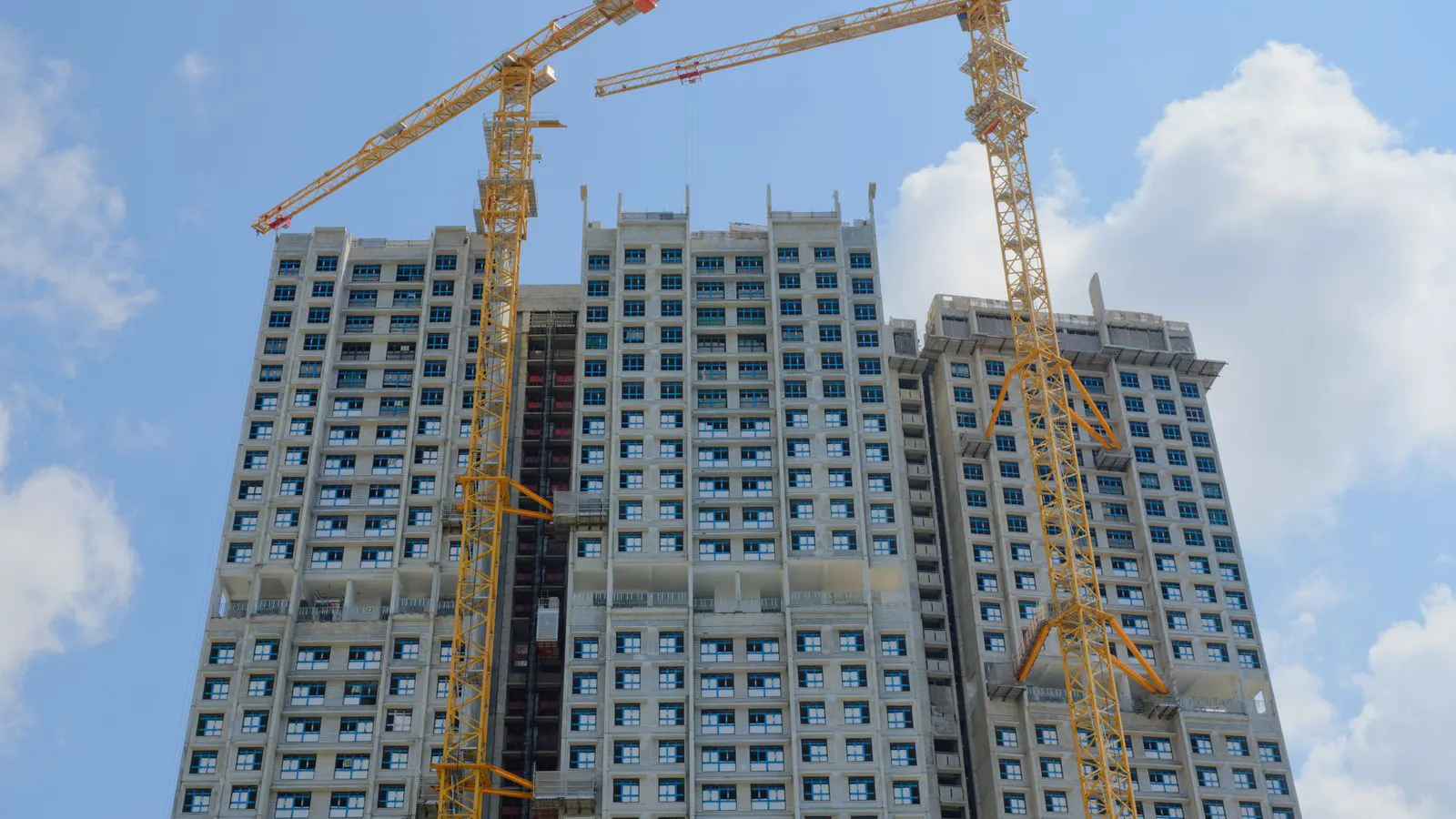
A lattice tower crane offers a lighter, modular structure and lower wind resistance, while a slewing tower crane provides a larger, fixed footprint and often higher lifting capacity. The choice depends on site access, crane pads, and the specific load profile of the building.
- Lattice towers use open truss structures to reduce material and wind load, but require careful assembly sequence.
- Slewing towers use solid or plate girders, offering a larger capacity margin but demanding a bigger foundation pad.
- Site access and pad size usually dictate the final choice before load charts are reviewed.
- Jib length and hoist speed must match the building height and material delivery rate.
- A lifting plan must account for the structural rigidity differences between the two types.
Structural differences between lattice and slewing towers
The core difference lies in how the tower mast resists bending and shear. A lattice tower crane uses a triangulated truss of steel sections, often HSS or box sections, connected by welded or bolted gussets. This open framework keeps the mass low and lets wind pass through the structure. The wind load on a lattice mast is significantly reduced because the solid face area is small.
A slewing tower crane typically uses a solid or plate-girded mast. The tower sections are usually fabricated as box or I-beam girders with a larger cross-section. This design provides a stiffer, more monolithic structure. The trade-off is weight. The slewing tower consumes more steel and requires a heavier crane pad to handle the higher static load.
Wind behavior also differs. On a lattice mast, gusts create vibration that is managed by the truss geometry. Operators may feel slight sway during high gusts, but the structure dissipates energy through the joints. Slewing towers are stiffer. They resist sway better under steady wind, but the larger surface area presents a bigger sail. In high-exposure sites, the wind load on a slewing tower can approach the service limit earlier than on a comparable lattice unit.
Capacity and lifting performance
Capacity is driven by jib length, counterweight, and the tower’s own weight distribution. A lattice tower crane often has a slightly higher lifting capacity for the same jib length because the mast itself is lighter. The reduced self-weight means the counterweight does not have to compensate for a heavier structure.
However, slewing tower cranes are frequently specified for heavier top loads. Many high-rise projects require placing precast panels or large steel beams. A slewing tower’s stiffer mast can handle these loads with less deflection. The operator gets a more predictable swing and a tighter hook control.
Hoist speed and slew rate are separate considerations. Lattice cranes often run with higher hoist speeds because the lighter structure allows faster material movement. Slewing cranes may prioritize slew stability over raw hoist speed. When lifting a heavy precast floor panel, the slew rate matters more than the hoist rate. The operator needs to swing the load across a large radius without inducing tower oscillation.
Site access and foundation requirements
Foundation design is where the two cranes diverge most clearly. A lattice tower crane requires a smaller crane pad because the total vertical load is lower. The pad area is often sufficient for a compact site layout. This allows the crane to be positioned closer to the edge of the building footprint, reducing the jib length needed to reach the same work area.
A slewing tower crane demands a larger, reinforced pad. The solid mast and heavier counterweight increase the load on the ground. In soft soil or areas with high water table, the pad may need deeper piles or a larger concrete slab. The crane pad also needs to be closer to the building center of gravity to keep the jib length manageable.
Access for assembly is another constraint. Lattice towers are built in modular sections, often 20 to 30 meters long. These sections can be erected by a smaller mobile crane or by the tower itself in a telescoping sequence. Slewing tower sections are heavier and stiffer. They often require a larger mobile crane for the initial erection, or a more complex jib assembly sequence. If site access is tight, the lattice option may be the only feasible choice for the upper tiers.
Operational workflow and building height
High-rise projects involve two distinct lifting phases. The lower floors are lifted with shorter jibs and higher loads. The upper floors require longer jibs and lighter loads, often for formwork and rebar. A lattice tower crane adapts well to this transition. The open structure allows for quick jib length changes. Operators can shorten the jib as the building rises, keeping the crane within its optimal capacity range.
Slewing tower cranes handle the lower phase with greater ease due to higher capacity. As the building climbs, the operator may need to reduce jib length to maintain safety margins. The stiffer mast means that the crane remains stable during these transitions. However, the change in jib length on a slewing tower may require more downtime because the structural components are heavier to reposition.
The building’s shape also influences the choice. A cylindrical or irregular building may benefit from a slewing tower’s larger slew radius. A rectangular slab building often works well with a lattice tower, where the jib can be positioned to cover multiple floors from a single location.
Maintenance and lifecycle considerations
Maintenance profiles differ because of the structural complexity. A lattice tower crane has more joints, gussets, and bolted connections. Regular inspection focuses on joint integrity, bolt tension, and weld condition. Corrosion protection is critical because the open structure exposes many small surfaces to weather.
A slewing tower crane has fewer joints and a simpler mast. The maintenance effort shifts to the slew bearing, the mast base plate, and the solid girder connections. The slew ring is a high-cost component. Wear on the bearing teeth and the drive mechanism requires periodic greasing and inspection. The solid mast is less prone to joint fatigue but can develop cracks at base plate welds if the foundation shifts.
Lifecycle costs are not always directly comparable. A lattice crane may have lower initial cost and lower foundation cost, but higher inspection frequency. A slewing crane may have higher upfront cost, but lower long-term structural fatigue risk if the slew bearing is well maintained. The total cost of ownership depends on the project duration and the local service network.
When to pick each option
| Option | Best for | Limitations |
|---|---|---|
| Lattice Tower Crane | Tight sites, high wind areas, long jib flexibility | More joints to inspect, lower capacity margin for heavy top loads |
| Slewing Tower Crane | Heavy precast work, large radius needs, stiff mast preference | Larger foundation pad, higher wind load, heavier assembly |
| Hybrid or Telescoping | Projects where capacity needs change over time | Higher cost, complex jib extension mechanism |
| Fixed Jib Lattice | Long-run projects with stable load profile | Less adaptable if building design changes |
| Slewing with Short Jib | Compact high-rises with heavy lower floors | Limited reach for upper floors, requires frequent jib changes |
Choose a lattice tower crane when site access is restricted, the crane pad is small, or the building is located in an exposed area with high gust loads. The open structure reduces wind force and keeps the crane operational in conditions that would shut down a slewing unit.
Choose a slewing tower crane when the project involves heavy precast panels, large steel beams, or a building shape that requires a wide slew radius. The stiffer mast provides better control for these loads. If the site has a large, reinforced pad and good access for a mobile crane to erect the tower, the slewing option is often preferred for its capacity and stability.
Final considerations for the lifting plan
The lifting plan must reflect the structural differences. For a lattice crane, the plan should account for joint inspection intervals and wind sensitivity. For a slewing crane, the plan should include slew bearing greasing schedules and foundation stability checks.
The choice is rarely about which crane is “better.” It is about which crane fits the site, the building, and the schedule. A well-designed lifting plan treats the crane as part of the structure, not just a tool. The interaction between the tower, the crane pad, and the building load path determines the safety and efficiency of the entire high-rise lifting operation.
Frequently asked questions
Can a lattice tower crane be converted to a slewing tower?
No. The mast structures are fundamentally different. Converting would require replacing the entire tower and slew mechanism.
Which crane is better for high wind conditions?
A lattice tower crane is generally better suited for high wind areas due to its open structure and lower wind load.
Do I need a larger crane pad for a slewing tower?
Yes. The heavier mast and counterweight require a larger and stronger foundation pad to handle the static load.
How does jib length affect capacity in both types?
Longer jibs reduce lifting capacity in both lattice and slewing cranes. The lattice type usually maintains capacity better at long jib lengths due to lower self-weight.
What is the main maintenance difference?
Lattice cranes require more frequent inspection of joints and bolts. Slewing cranes require more attention to the slew bearing and base plate connections.