Why Tower Crane Capacity Charts Are Not Enough for Heavy Lifting
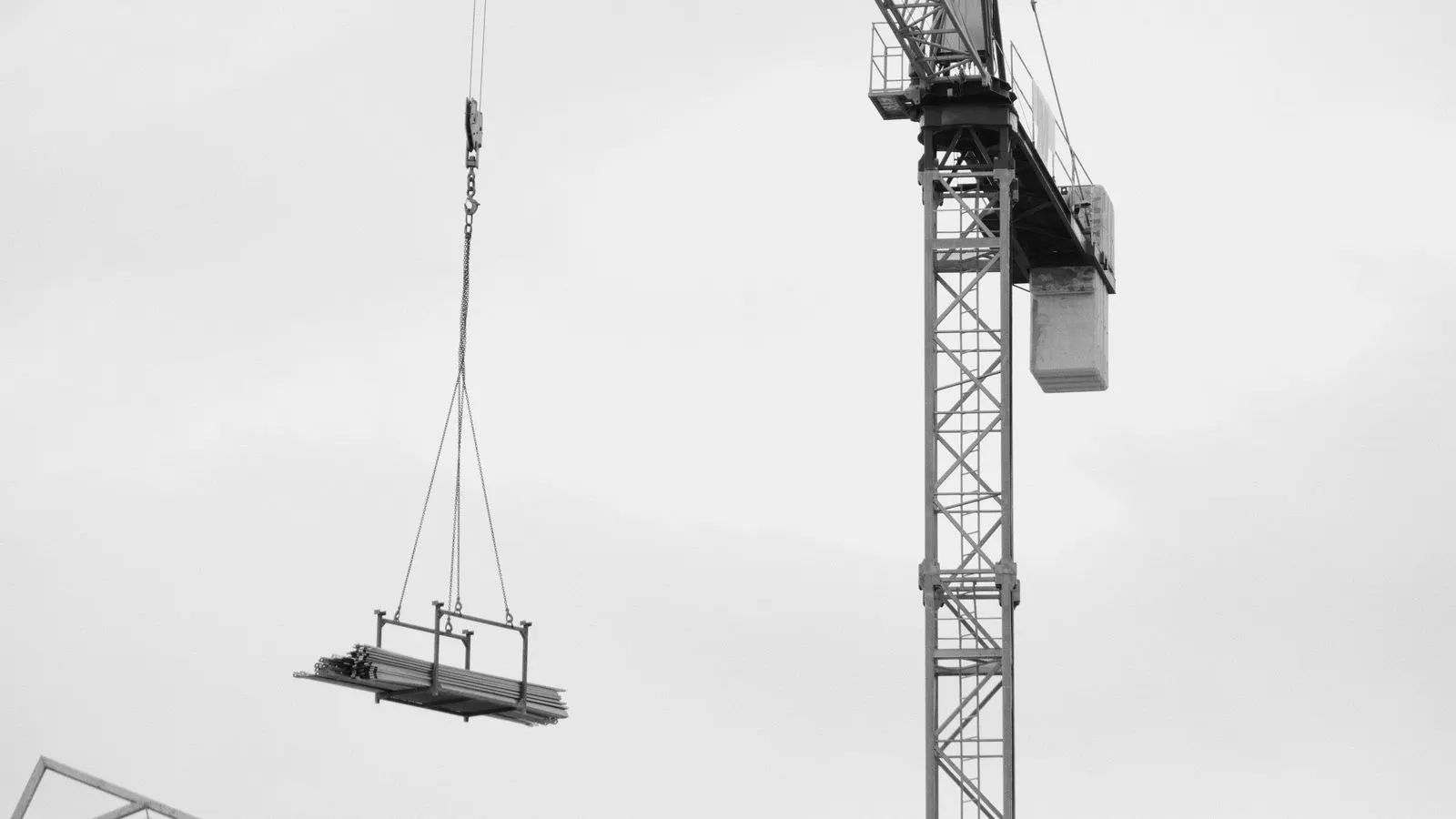
Standard tower crane capacity charts provide baseline data but do not account for site-specific variables like wind, load eccentricity, and boom configuration. Engineers must use these charts as starting points, not final answers, to ensure safe heavy lift execution.
- Capacity charts assume ideal conditions; real-world site variables often require derating the maximum capacity.
- Wind speed is a critical factor that can significantly reduce the safe lifting capacity of a tower crane.
- Load eccentricity and rigging geometry must be calculated to account for the actual weight distribution during the lift.
- Always consult the manufacturer's specific operating manual for the exact model and configuration in use.
- A pre-lift risk assessment is essential to identify hidden risks that standard charts do not reveal.
Understanding the Limitations of Standard Data
Tower crane capacity charts are an essential tool for engineers and site managers, yet they are often misunderstood as definitive answers. These charts typically display the maximum weight a crane can lift at various radii and boom lengths under ideal conditions. However, ideal conditions rarely exist on an active construction site.
The fundamental limitation of a standard capacity chart is that it represents a theoretical maximum. It assumes a perfectly vertical boom, zero wind, and a load that is perfectly balanced and close to the center of rotation. In practice, these assumptions are almost always violated.
When planning a heavy lift, relying solely on these charts can lead to dangerous underestimation of stress on the crane. A load that appears within the chart’s limits may become unsafe due to a slight gust of wind or an offset center of gravity. This article explores the specific variables that engineers must consider beyond the printed table to ensure a safe and successful lift.
The Critical Role of Wind Speed
Wind is arguably the most significant variable that invalidates a standard capacity chart reading. As wind speed increases, the aerodynamic forces on the jib, counterweight, and the load itself create a substantial lateral load on the tower.
Most manufacturers provide a maximum operating wind speed for safe lifting, often in the range of 20 to 25 meters per second. However, the crane’s capacity is not simply cut off at this speed. It derates continuously as wind increases. A chart might show a capacity of 50 tons at a certain radius in calm weather, but in 15 meters per second wind, the safe capacity could be significantly lower.
Engineers must monitor wind conditions in real-time. A load that is safe in the morning may be too heavy by the afternoon if the weather changes. Furthermore, wind speed is not uniform. It can vary significantly along the length of the jib, creating complex torque forces that are difficult to predict without specialized software or on-site anemometers.
Accounting for Load Eccentricity
The position of the load’s center of gravity relative to the crane’s hook is another critical factor. Standard charts assume the load is suspended directly beneath the hook. If the load is offset, or if the rigging creates an angle, the effective radius of the load increases.
For example, if a long steel beam is lifted at one end, the center of gravity is far from the hook. This creates a moment that is equivalent to lifting a heavier load at a shorter radius. If the engineer uses the chart for the nominal radius without accounting for this eccentricity, the crane will be overloaded.
Rigging geometry is equally important. The angle of the slings and the position of the hook relative to the load’s center of gravity must be calculated. A 30-degree sling angle, for instance, significantly increases the tension in the slings and the effective load on the hook. This additional load is not reflected in the basic capacity chart.
The Impact of Boom Configuration and Length
Not all tower crane configurations are equal. A crane with a longer jib may have a lower capacity at the same radius compared to a shorter jib. This is because the longer jib acts as a larger lever arm, increasing the moment on the tower.
Engineers must identify the exact jib length and any additional counterweights installed for the specific lift. Some manufacturers offer optional counterweights that increase the capacity, but these must be accounted for in the calculations. The capacity chart for a standard configuration will not reflect the performance of a crane with modified counterweights.
Additionally, the position of the jib on the tower can affect capacity. A crane with a longer jib may have a reduced capacity at the outermost tip due to the increased moment. Always refer to the specific diagram for the configuration in use, not just the general table.
Practical Preparation and Risk Assessment
To mitigate the risks associated with standard capacity charts, a comprehensive pre-lift risk assessment is mandatory. This process involves gathering all relevant data, including wind forecasts, load weights, and rigging plans.
The following steps should be taken before executing a heavy lift:
- Confirm the exact load weight and center of gravity from the manufacturer’s datasheet.
- Determine the precise lift radius, accounting for the load’s dimensions and rigging geometry.
- Check the current and forecasted wind speed at the crane’s location.
- Verify the crane’s configuration, including jib length and counterweight installation.
- Apply any necessary derating factors based on the above variables.
- Conduct a mock-up of the lift to identify potential obstructions or interference.
This structured approach ensures that all hidden risks are identified and managed. It transforms the capacity chart from a simple reference into a robust tool for safe planning.
The Importance of Manufacturer Guidelines
While industry standards provide a framework, the manufacturer’s specific operating manual is the ultimate authority on crane performance. Each model and configuration may have unique characteristics that are not captured in generic charts.
Manufacturers include detailed diagrams and tables that specify capacity under different conditions. These documents often contain notes about derating for high winds, load eccentricity, and other site-specific factors. Ignoring these notes can lead to serious safety violations.
Engineers should be trained to interpret these documents correctly. This involves understanding the difference between a maximum capacity and a recommended working load, as well as the conditions under which the data is valid. Regular training and updates are essential to ensure that the team is aware of the latest manufacturer guidelines.
Conclusion: A Holistic Approach to Safety
In summary, tower crane capacity charts are a starting point, not a finish line. They provide a baseline for planning, but they do not account for the real-world complexities of heavy lifting. Wind, load eccentricity, rigging geometry, and boom configuration all play a critical role in determining the safe working load.
By adopting a holistic approach that includes a detailed risk assessment, real-time monitoring, and adherence to manufacturer guidelines, engineers can ensure that their lifts are safe and efficient. This level of planning is not just a regulatory requirement; it is a fundamental aspect of professional practice in the construction industry.
The goal is not to avoid using capacity charts, but to use them correctly. By understanding their limitations and supplementing them with site-specific data, engineers can make informed decisions that protect their teams and their projects.
Frequently asked questions
Can I use a standard capacity chart for a lift in windy conditions?
No, standard charts are typically for calm conditions. You must derate the capacity based on the current wind speed and refer to the manufacturer's specific wind derating tables.
How do I calculate the effective radius for an eccentric load?
You must determine the horizontal distance from the crane's center of rotation to the load's center of gravity, accounting for the load's dimensions and rigging geometry.
What is the difference between maximum capacity and working load?
Maximum capacity is the theoretical limit under ideal conditions, while working load is the safe limit considering site-specific factors like wind and load eccentricity.
Do I need to check the manufacturer's manual for every lift?
Yes, it is essential to consult the specific operating manual for the exact model and configuration in use, as it contains unique derating factors and limitations.
How often should I update my risk assessment?
A risk assessment should be updated for any change in conditions, such as a change in wind speed, load weight, or rigging method, and must be reviewed before every lift.