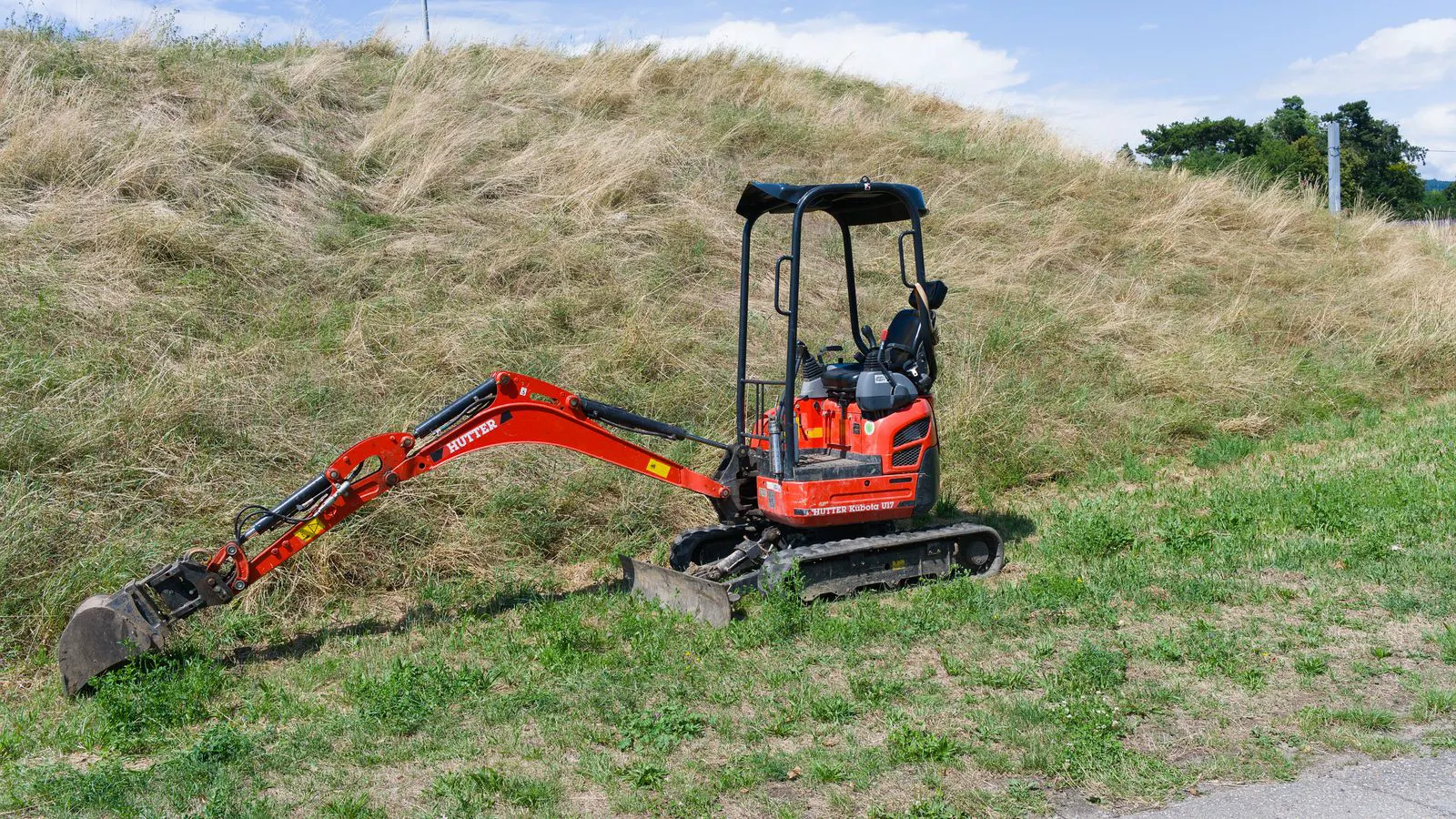
Buyer's Guide: Selecting the Right Mini Excavator Bucket
A mini excavator bucket must match soil density, lift height, and material type. This guide covers bucket styles, dimensions, and fit checks so you can select the right attachment for your site without over-specifying or wasting hydraulic capacity.
- Match bucket width to the mini excavator swing and site access limits.
- Choose a standard bucket for general digging and a bucket with teeth for hard or rocky soil.
- Verify the bucket pin diameter and mounting hardware match your excavator model.
- Consider bucket depth and lift height to optimize the earthmoving capacity per cycle.
- Inspect wear patterns on the leading edge before purchasing a used bucket.
Matching Bucket Width to Site Access
The first decision is width. A mini excavator operates in tight spaces, so the bucket must clear the machine body, the operator cabin, and the surrounding work zone. A bucket that is too wide forces the operator to swing further to the left or right, increasing cycle time and the risk of hitting obstacles. A bucket that is too narrow creates deep, narrow trenches that require multiple passes to widen.
Start by measuring the available working envelope. If the site is a residential backyard, a narrow bucket keeps the digging profile tight. If the work involves trenching along a driveway or a property line, a standard width gives more material per scoop. Check the maximum swing angle of the excavator before selecting a width. The bucket must not hit the rear counterweight or the boom when fully rotated. Walk the perimeter of the planned work area with a measuring tape and mark the swing radius on the ground. Mark the location of underground utilities, tree roots, and existing structures. Use these marks to verify that the bucket clears every obstacle during a full swing. A 350 millimeter bucket might fit a 600 millimeter trench, but it may not fit a 450 millimeter gap between a fence and a foundation wall. Always measure the actual gap, not the theoretical one.
Choosing the Right Bucket Style
Bucket style is defined by the leading edge, the cutting edge, and the shape of the back plate. A standard bucket has a straight leading edge and a flat back. It works well for soft soil, sand, and general grading. The cutting edge wears evenly, and the back plate helps push material into a pile.
A toothed bucket adds hardened steel teeth to the leading edge. The teeth bite into dense soil, compacted clay, and small rock. The trade-off is wear on the teeth. You must replace them when they become dull. A smooth-edged bucket is easier to clean but struggles in hard ground.
A wide-angle bucket has a curved leading edge. It scoops more material in a single pass. The curve helps clear material from the trench floor without scraping the sides. This style works well for trenching and dewatering. A narrow-angle bucket is the opposite. It is used in tight spaces where a wide bucket would not fit.
A dozer bucket has a straight back plate and a flat bottom. It is designed for pushing and grading, not scooping. It moves material laterally across the site. Use it for site preparation and leveling.
The choice depends on the daily task. If you spend most of the day digging a narrow trench for a water line, a narrow-angle bucket keeps the trench walls clean. If you are moving loose topsoil to a compost heap, a standard bucket dumps cleanly without sticking. If you are breaking up old concrete slabs, a toothed bucket is necessary. The teeth grip the concrete and break it into manageable chunks. A standard bucket would slide over the concrete and damage the cutting edge.
Evaluating Bucket Dimensions and Lift Height
Earthmoving capacity depends on three dimensions: bucket length, bucket depth, and lift height. Length determines the width of the trench or the width of the cut. Depth determines how deep the bucket can reach without straining the hydraulic cylinders. Lift height determines how high the bucket can place material in a truck or a pile.
A common mistake is selecting a bucket based on length alone. A long bucket that cannot reach the required depth forces the operator to dig in shallow layers. This increases cycle time. A shorter bucket with a deep profile is often more efficient for trenching.
Check the lift height at full extension. The bucket must clear the truck bed or the top of the spoil pile. If the lift height is too low, the operator must dig, swing, and dump multiple times to fill a load. This reduces the earthmoving capacity per hour.
Measure the depth of the planned trench and add a margin for the bucket to fully penetrate the soil. If the trench is 1.2 meters deep, a bucket with a 1.0 meter depth will not reach the bottom. The operator will have to stand in the trench or use a longer boom. Measure the height of the truck bed or the spoil pile. The bucket must clear this height by at least 200 millimeters to dump cleanly. If the lift height is marginal, the bucket may scrape the side of the truck or spill material. This causes material loss and slows the work.
Considering Soil Conditions
Soil conditions dictate the bucket material and the cutting edge. Soft soil like sand or topsoil does not require hardened steel. A standard carbon steel bucket is sufficient. The leading edge wears slowly because the soil is abrasive but not hard.
Clay is more challenging. It sticks to the bucket and pulls against the back plate. A bucket with a smooth back plate and a slightly curved profile helps release the clay. If the clay is compacted, a toothed bucket or a bucket with a hardened leading edge is necessary.
Rock and gravel require the strongest cutting edge. The teeth must be replaceable. A bucket with a bolt-on cutting edge is easier to maintain. You can swap the edge when it wears. A cast bucket is cheaper but harder to repair. If the leading edge cracks, the whole bucket may need replacement.
Soil conditions also affect the back plate. In wet, sticky soil, a smooth back plate prevents material from sticking. In dry, loose soil, a slightly curved back plate helps push material into a pile. In rocky soil, a reinforced back plate resists impact damage. Always test the bucket in a small area of the actual soil before starting the full job. If the bucket sticks to the soil, adjust the back plate or choose a different style.
Hydraulic Fit and Mounting Hardware
The bucket must attach securely to the excavator arm. The mounting pin, the clevis, and the hydraulic cylinders determine the fit. A loose fit causes vibration, noise, and premature wear. A tight fit strains the hydraulic seals.
Check the pin diameter of the excavator arm. The bucket must have a matching pin hole. The pin should not be forced into the bucket. If the pin is too small, the bucket will spin on the arm. If the pin is too large, the bucket will not fit.
The hydraulic cylinders must have the correct length and stroke. The cylinders control the bucket tilt. If the cylinders are too short, the bucket cannot tilt far enough to dump material. If they are too long, the bucket may hit the arm when fully tilted.
Measure the pin diameter with a caliper. Measure the stroke of the hydraulic cylinders by extending them to full length and recording the distance between the mounting points. If the bucket pin is 10 millimeters larger than the arm pin, the bucket will not fit. If the pin is 10 millimeters smaller, the bucket will spin and damage the arm. Always use the correct size. Do not drill the pin hole larger to force a fit. This weakens the attachment point and can cause failure.
Inspecting Used Buckets
Used buckets are a common option for mini excavator work. They are cheaper than new buckets but require a thorough inspection. Look for cracks in the leading edge, the back plate, and the corners. Cracks are small at first but grow under load.
Check the wear on the cutting edge. A worn edge is rounded and dull. It will not cut into soil. The wear should be even. If one side is worn more than the other, the bucket is out of alignment.
Look for weld repairs. Welds are common on used buckets. A repair is acceptable if it is done by a qualified welder and the metal is sound. A poor weld can crack under load.
Tap the leading edge with a hammer. A solid sound indicates sound metal. A dull sound may indicate a crack. Check the pin hole for wear. A worn pin hole will cause the bucket to spin on the arm. If the pin hole is worn, it must be reamed and fitted with a new bushing. This is a moderate repair. If the pin hole is severely worn, the bucket may need replacement.
Criteria Table: How to Evaluate a Mini Excavator Bucket
| Criterion | What to look for | Why it matters |
|---|---|---|
| Bucket width | Matches excavator swing and site access | Prevents collisions and reduces cycle time |
| Cutting edge | Straight, toothed, or curved based on soil | Determines digging efficiency and wear rate |
| Back plate | Smooth or curved based on material type | Affects material release and trench cleaning |
| Pin diameter | Matches excavator arm clevis | Ensures secure attachment and prevents spin |
| Lift height | Clear of truck bed or spoil pile | Maximizes earthmoving capacity per cycle |
| Wear pattern | Even wear on leading edge | Indicates proper alignment and fit |
Final Checklist Before Purchase
- Measure the excavator arm pin diameter and the hydraulic cylinder stroke.
- Determine the maximum swing angle and the site access limits.
- Identify the primary soil condition and the material to be moved.
- Select a bucket style that matches the soil and the task.
- Verify the lift height clears the truck bed or the spoil pile.
- Check the cutting edge material and the wear pattern on used buckets.
- Confirm the mounting hardware is included or available.
The right mini excavator bucket is not the largest or the cheapest. It is the one that fits the machine, the site, and the soil. A bucket that is too big wastes hydraulic capacity. A bucket that is too small wastes time. A bucket that does not fit the soil wears out quickly. Match the dimensions to the task, and the attachment will perform for the life of the machine.
Frequently asked questions
What is the difference between a standard bucket and a toothed bucket?
A standard bucket has a smooth leading edge for soft soil. A toothed bucket has hardened steel teeth for dense soil and small rock.
How do I know if a bucket is too wide for my mini excavator?
Check the maximum swing angle. If the bucket hits the counterweight or the cabin when fully rotated, it is too wide.
What bucket style is best for trenching?
A wide-angle bucket is best for trenching. The curved leading edge scoops more material and cleans the trench floor.
How often should I replace the cutting edge on a toothed bucket?
Replace it when the teeth are dull and the bucket no longer cuts into the soil. The wear rate depends on the soil conditions.
Can I use a dozer bucket for digging?
No. A dozer bucket is designed for pushing and grading. It does not scoop material. Use a standard or wide-angle bucket for digging.