How to Select the Right Concrete Finishing Machine
Select a concrete finishing machine by matching power, travel method, and finishing tool size to your slab dimensions and labor availability. The right choice balances speed, surface quality, and operator fatigue.
- Match machine power and travel method to slab size and labor availability.
- Choose finishing tools that match the desired surface finish and cure period.
- Plan for operator rotation and maintenance to sustain quality across the shift.
- Verify surface quality with a test area before committing to the full pour.
Define the job scope before selecting equipment
Start with the physical facts of the pour. Measure the slab area, note the thickness, and identify the desired surface finish. A small garage slab and a large warehouse floor demand completely different equipment. The first decision is whether you need a hand tool, a ride-on machine, or a walk-behind trowel.
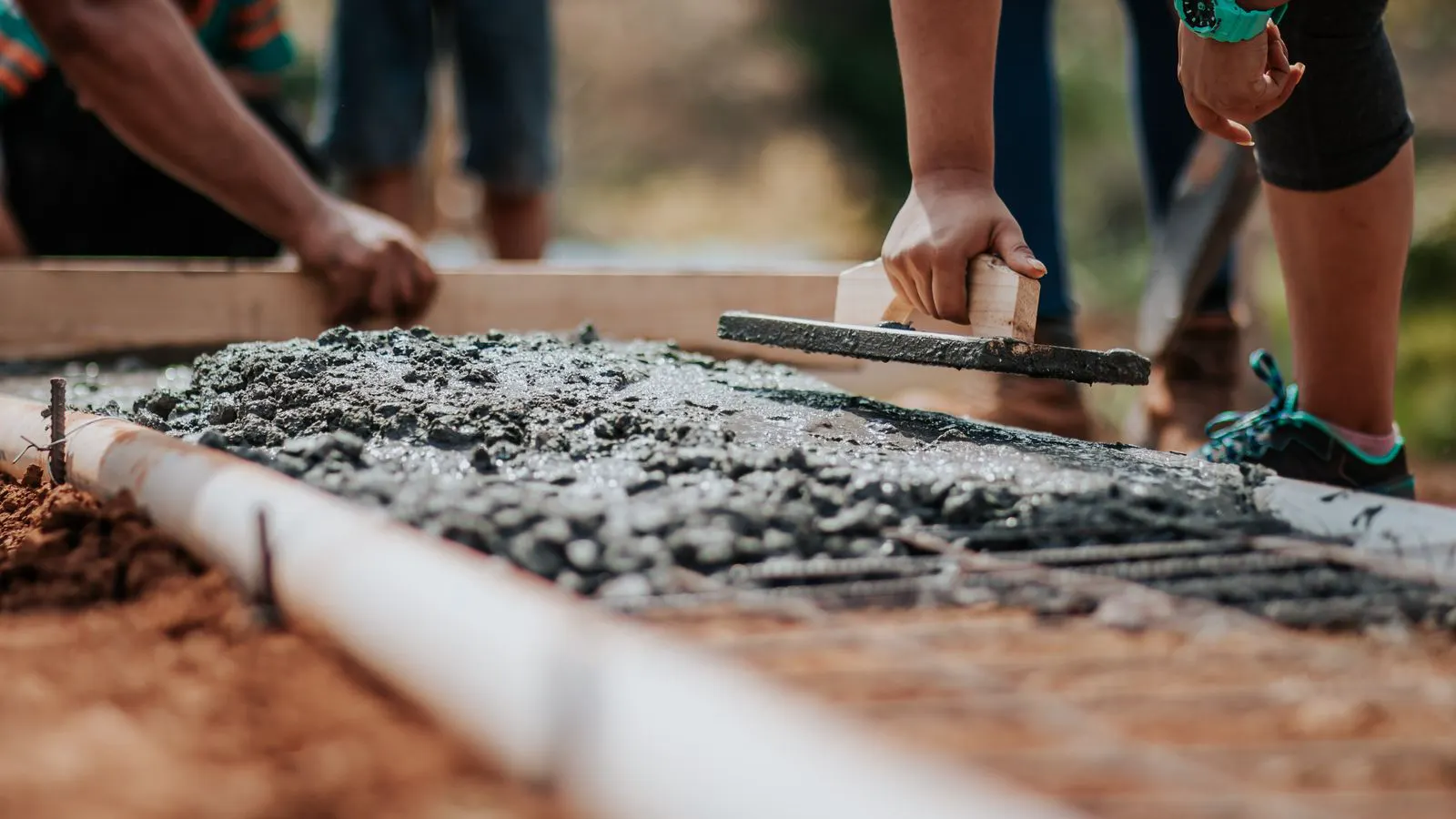
Hand tools suit small areas and tight spaces. They require less setup and are easier to maneuver around rebar, forms, and corners. But they are labor-intensive and slow. A walk-behind trowel covers medium-sized slabs and offers a balance of power and maneuverability. Ride-on machines handle large open pours where speed matters and space is not a constraint.
Labor availability drives the decision more than equipment specs. If you have three operators and one slab, hand tools may be sufficient. If you have one operator and a large slab, a ride-on machine reduces fatigue and increases productivity. The goal is to finish the slab while the concrete is still workable, without overworking the surface or letting the operators push the machine through a difficult shift.
Match machine power to slab size and labor needs
Power determines how much surface area a machine can finish per hour. A low-power hand tool may take four to six hours to finish a small slab. A walk-behind machine can reduce that time significantly. A ride-on machine finishes large areas in a fraction of the time.
Consider the slab thickness and aggregate size. Thicker slabs with larger aggregate require more power to achieve a smooth finish. A machine that struggles with 12-inch concrete will slow down and create uneven surfaces. The operator will push harder, the surface will be inconsistent, and the finish quality will suffer.
Power also affects operator fatigue. A machine that requires constant pushing or steering will tire the operator quickly. Fatigue leads to uneven pressure on the finishing tools, which creates ridges and low spots. A machine with adequate power and a comfortable travel method keeps the operator focused on surface quality rather than physical strain.
Choose the right travel method
The travel method determines how the machine moves across the slab. Hand tools are pushed or pulled by the operator. Walk-behind machines are driven by the operator standing on a platform or handle. Ride-on machines are driven from a seat.
Hand tools offer the most maneuverability. They can reach corners, edges, and tight spaces without turning. But they are the most physically demanding. A walk-behind machine reduces the physical load and allows the operator to cover more ground per hour. Ride-on machines are the fastest for large open areas but require turning space.
For small slabs under 500 square meters, hand tools or walk-behind machines are usually sufficient. For slabs over 500 square meters, a ride-on machine becomes more practical. The key is to match the travel method to the available space and the number of operators. A ride-on machine in a tight area will cause delays and potential damage to the fresh concrete.
Select the finishing tools for the desired surface
Finishing tools are the parts that actually shape the concrete surface. Trowels are the most common tool. They can be flat, round, or serrated. Flat trowels create a smooth, dense surface. Round trowels work well for general slabs. Serrated trowels create a textured finish that improves slip resistance.
The tool size determines the pass width. A small trowel creates a finer finish but requires more passes. A large trowel covers more ground per pass but may leave visible lines if the operator is not careful. For large slabs, larger tools reduce the number of passes and improve efficiency.
The finishing sequence matters. Start with a coarse tool to level the surface and remove water sheen. Move to a finer tool to smooth the surface and create the final finish. The timing of each pass depends on the concrete set time. Finishing too early can pull too much moisture to the surface. Finishing too late can create a weak surface. The operator must watch the concrete surface and adjust the sequence based on conditions.
Plan for operator rotation and maintenance
A single operator cannot maintain consistent quality for an entire shift. Fatigue changes the pressure on the finishing tools and the speed of travel. Both affect the final surface. Plan for operator rotation every 45 to 60 minutes. This keeps the operator alert and maintains consistent tool pressure.
Maintenance is equally important. A dirty or damaged trowel creates scratches and uneven surfaces. Clean the trowels between passes if the concrete is dirty or if the surface is rough. Inspect the machine before each shift. Check the trowel shafts, bearings, and travel mechanism. A machine that requires constant adjustments will slow down and reduce quality.
For large pours, consider having a second operator on standby. This person can assist with edging, corner work, or tool changes. The standby operator can also monitor the concrete set time and signal when to move to the next finishing stage.
Common mistakes in selecting concrete finishing equipment
The most common mistake is choosing a machine based on price alone. A cheap machine may save money upfront but create delays, poor quality, and operator fatigue. The cost of a bad finish is higher than the cost of a reliable machine.
Another mistake is ignoring the slab thickness. A machine that works well on a 4-inch slab may struggle on an 8-inch slab. The operator will push harder, the surface will be uneven, and the finish will require additional work. Always match the machine power to the slab thickness.
A third mistake is not planning for turning space. A ride-on machine needs room to turn without driving over the fresh concrete. If the slab is too small for the machine, you will either use a smaller machine or create damage and delays. Measure the slab and test the turning radius before selecting the equipment.
Finally, many buyers ignore the finish quality. A machine that finishes quickly but produces a rough surface is not a good choice. The finish quality affects durability, appearance, and slip resistance. Always test the machine on a small area before committing to the full pour.
Verify the selection with a test area
Before starting the full pour, set aside a small area for a test finish. Use the selected machine and tools on this test area. Observe the surface quality, the operator’s comfort, and the time required to finish the test area.
Check for ridges, low spots, and water sheen. If the surface is uneven, adjust the tool size or the finishing sequence. If the operator is tired after the test area, consider a different machine or a shorter shift. If the test area meets the quality standard, proceed with the full pour.
The test area also helps with timing. It shows how long the concrete takes to reach the right set time for each finishing pass. This information is critical for planning the full pour. A successful test area gives confidence that the selected equipment will work well on the full slab.
Machine selection table
| Slab Size | Recommended Machine | Travel Method | Best For |
|---|---|---|---|
| Under 100 sq m | Hand tool | Pushed | Small areas, tight spaces, limited labor |
| 100 to 500 sq m | Walk-behind trowel | Operator-driven | Medium slabs, balanced speed and maneuverability |
| Over 500 sq m | Ride-on trowel | Seated | Large open pours, high productivity |
| Irregular shape | Hand tool or walk-behind | Pushed or driven | Complex shapes, tight corners, mixed operations |
This table provides a starting point. The final selection depends on the specific slab conditions, labor availability, and desired finish quality. Always verify with a test area before committing to the full pour.
Final verification step
After the full pour, inspect the finished surface. Check for uniformity, flatness, and the absence of ridges or low spots. Walk the surface and feel for any irregularities. Use a straightedge to check for flatness if the project requires it.
If the surface does not meet the standard, identify the cause. Was the machine underpowered? Were the tools too small? Did the operator fatigue cause uneven pressure? Use this information to adjust the selection for the next pour.
Documentation is part of the process. Record the machine used, the tool sizes, the finishing sequence, and the operator rotation schedule. This information helps with future pours and provides a reference for training new operators. A well-documented process ensures that the same quality is achieved on every project, regardless of who is operating the machine.
Frequently asked questions
What is the minimum slab size for a ride-on concrete finishing machine?
Most ride-on machines require at least 500 square meters to be practical. Smaller slabs create turning problems and reduce the speed advantage.
Can I use a hand tool for a large slab if I have many operators?
Yes, but it increases labor cost and time. A large slab with multiple hand tools may still take longer than a single ride-on machine. The decision depends on labor cost and the required finish quality.
How often should I rotate operators during concrete finishing?
Every 45 to 60 minutes is a good starting point. Fatigue affects tool pressure and surface quality. Rotation keeps the operator alert and maintains consistent finish.
What tool should I use for the first pass on a fresh slab?
Use a coarse tool, such as a flat or serrated trowel, for the first pass. This levels the surface and removes water sheen. Follow with a finer tool for the final finish.
Do I need to clean the finishing tools between passes?
Yes, if the concrete is dirty or the surface is rough. Dirty tools create scratches and uneven surfaces. Cleaning takes time but improves finish quality and reduces rework.