Trolley vs Stationary Concrete Mixers: Which Fits Your Site?
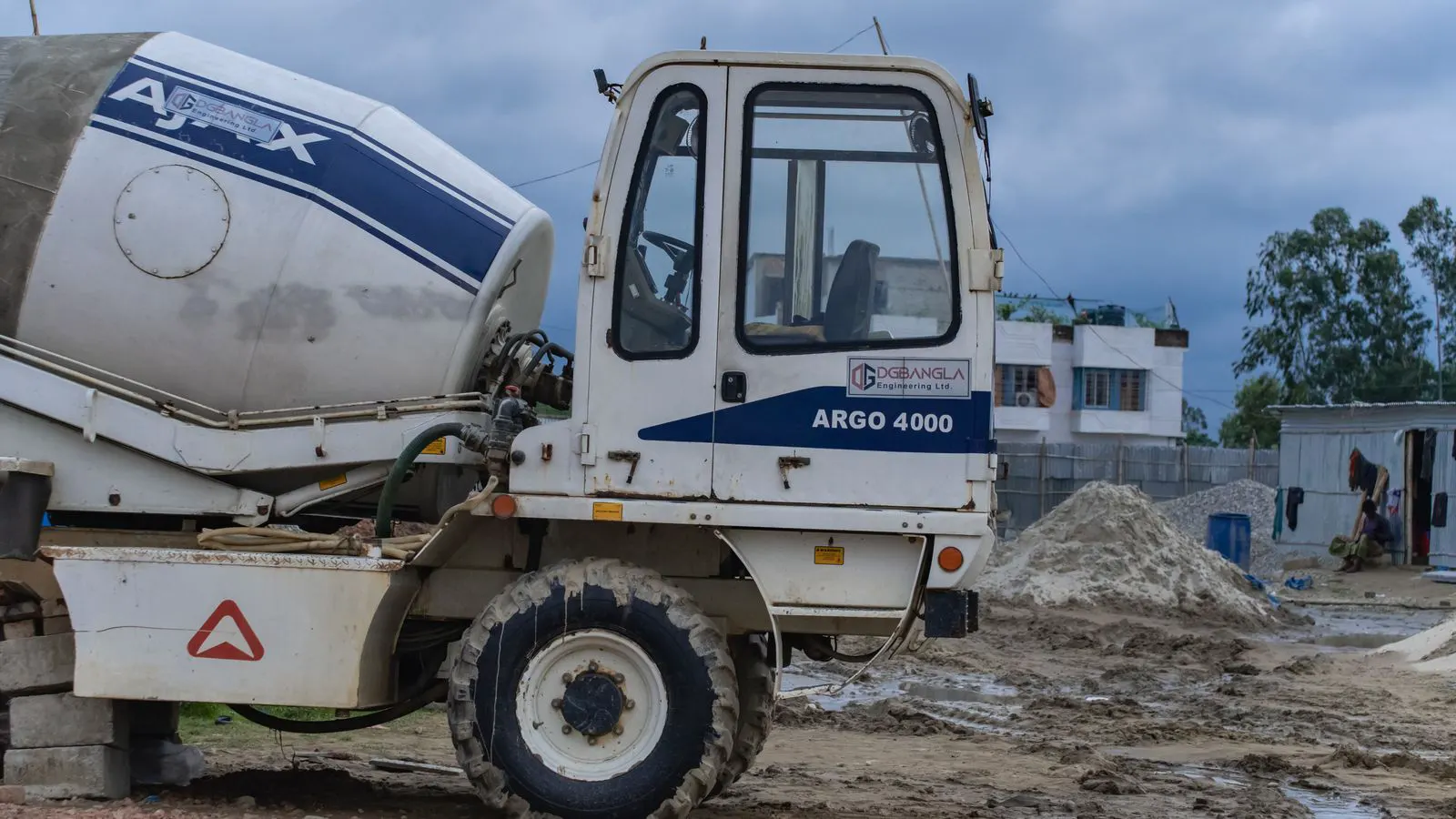
Trolley mixers suit small, mobile jobs with limited space, while stationary units handle high-volume, fixed production. Your choice depends on daily output requirements, site access, and crew size.
- Trolley mixers prioritize movement and low footprint; stationary mixers prioritize output and continuous operation.
- Check your daily cubic meter target before selecting a machine, as this drives the capacity decision.
- Stationary units require a stable base, utility access, and dedicated maintenance space.
- Trolley mixers are easier to reposition but add handling time to your site logistics plan.
- Match the mixer type to your crew size and the frequency of batch changes.
The Core Trade-Off
A concrete mixer is the first point of contact between raw materials and a workable pour. The decision between a trolley and a stationary unit is rarely about which machine mixes better. Both types use a rotating drum, a paddling or paddling system, and a discharge chute. The difference lies in how the machine integrates into your site.
Trolley mixers sit on a wheeled frame. They are designed to be pushed, pulled, or towed by a small vehicle. They consume less site space and can be moved between formwork zones without heavy lifting. Stationary mixers are bolted to a pad or a concrete slab. They draw power from a fixed source and remain in one location for the duration of the project.
This distinction changes how you plan the site. A trolley unit fits into a tight urban block or a narrow access road. A stationary unit fits a precast yard or a long-duration pour where the same batch of concrete is needed repeatedly. The answer to which mixer fits your site depends on your daily volume, your crew, and your access constraints.
Mixing Capacity and Daily Output
The first number you need is your daily concrete requirement. Count the volume in cubic meters per day, not per hour. A trolley mixer typically handles smaller batches and requires more frequent refills. A stationary mixer handles larger batches and can run continuously for several hours.
If your site needs 5 to 10 cubic meters per day, a trolley mixer is usually sufficient. The operator can mix, discharge, and reposition the machine within the same hour. If your site needs 30 to 100 cubic meters per day or more, a stationary mixer becomes the practical choice. The operator can keep the drum turning while the truck or cart delivers aggregates, and the discharge can feed a pump or a trailer directly.
Capacity is not just about the drum size. It is about the cycle time. A trolley mixer often has a shorter cycle because it is smaller. A stationary mixer has a longer cycle but a larger payload. Multiply the cycle time by the number of cycles per day to see if the machine can keep up. If the machine stops to be moved or refueled, your crew waits. If the machine runs continuously, your crew works.
Site Logistics and Access
Site logistics drive the physical layout of your project. Consider the distance from the material store to the pour. If the pour is 50 meters away and the access road is narrow, a trolley mixer saves you from dragging a heavy stationary unit. If the pour is 5 meters from the mixing area, a stationary unit is easier to manage because it does not require transport.
Trolley mixers need a path. They need a flat, compacted surface or a prepared pad. They need room to turn around. They need a person to push or pull them. Stationary mixers need a fixed location. They need a power source within cable length. They need a discharge point that aligns with your delivery method.
Think about the crew. A trolley mixer often needs two operators: one to feed the drum and one to guide the machine. A stationary mixer needs one operator at the controls, but it needs a support crew to feed the hopper and clear the chute. If you have a small crew, the trolley option reduces the number of people required at the mixing point. If you have a larger crew, the stationary option lets you specialize roles.
Power and Utility Requirements
Power is a hidden constraint. Trolley mixers can be driven by diesel engines or electric motors. Diesel trolley mixers are self-contained. They need fuel storage and a place to start the engine. Electric trolley mixers need a power source. They are quieter and cleaner, but they are limited to sites with adequate voltage and current capacity.
Stationary mixers are almost always electric. They need a dedicated circuit or a generator. They need a stable ground for the control panel. They need a place to store the spare parts and the lubricants. If your site has no power, a diesel trolley mixer is the only viable option. If your site has a generator, both options are possible, but the generator must be sized for the mixer and the other site equipment.
Check the power draw. A small trolley mixer draws less current. A large stationary mixer draws more. If you are sharing a generator with a compressor and a light, the generator must have headroom. A stationary mixer that stalls because the generator is overloaded will stop your pour. A trolley mixer that runs on a small generator will keep working.
Maintenance and Serviceability
Maintenance frequency is different for the two types. Trolley mixers are exposed to the elements and to transport. They need regular checks of the wheels, the bearings, and the frame. They need the drum paddles inspected after every shift. They need the discharge chute cleaned to prevent concrete buildup.
Stationary mixers are protected by a fixed location. They need regular checks of the motor, the gearbox, and the control system. They need the drum paddles inspected, but less frequently than a trolley mixer because the machine does not move. They need the discharge chute cleaned, but they can do this without moving the machine.
The spare parts strategy changes. A trolley mixer needs portable spare parts. You can carry a set of paddles, a set of bearings, and a set of belts in a truck. A stationary mixer needs a dedicated storage area. You can keep a larger inventory of parts on site because the machine is not moving. If a part fails on a trolley mixer, you can replace it in 30 minutes and keep working. If a part fails on a stationary mixer, you can order the part and wait for a technician.
When to Choose a Trolley Mixer
Choose a trolley mixer when your site is small and mobile. Choose it when you need to move the mixing point to different formwork zones. Choose it when your daily volume is low to medium. Choose it when your crew is small. Choose it when your site has no fixed power or limited access.
A trolley mixer is the right choice for a residential pour, a small commercial renovation, or a precast yard that moves batches frequently. It is also the right choice for a site where the concrete is mixed in small batches and poured immediately. The operator can mix, discharge, and clean the machine within an hour. The next batch can start right away.
The limitation is that a trolley mixer cannot handle high-volume pours. If your site needs 50 cubic meters in a day, the trolley mixer will be too slow. You will spend more time moving and refilling the machine than mixing. The crew will wait. The pour will be delayed.
When to Choose a Stationary Mixer
Choose a stationary mixer when your site is fixed and long-term. Choose it when you need high daily output. Choose it when you have a dedicated crew. Choose it when you have a fixed power source. Choose it when you need to feed a pump or a trailer directly.
A stationary mixer is the right choice for a precast plant, a large infrastructure pour, or a commercial building with a long production schedule. It is also the right choice for a site where the concrete is mixed in large batches and poured over several hours. The operator can keep the drum turning while the truck delivers aggregates. The discharge can feed the pump continuously.
The limitation is that a stationary mixer is not mobile. You cannot move it to a different part of the site. If your pour moves, you need a new machine or a transport plan. The fixed location requires a stable base and a power connection. If your site is temporary or the access is poor, the stationary mixer will be difficult to install.
Final Recommendation
The decision comes down to your daily volume and your site constraints. If you need 5 to 20 cubic meters per day and your site is small or mobile, a trolley mixer is the better fit. If you need 30 cubic meters per day or more and your site is fixed, a stationary mixer is the better fit.
Check the access road. Check the power source. Check the crew size. Check the discharge point. These four factors will tell you which machine will keep your crew working. A mixer that is the wrong size will slow you down. A mixer that is the right size will let you pour on schedule.
Frequently asked questions
Can a trolley mixer be used for high-volume pours?
No, a trolley mixer is too slow for high-volume pours. It requires frequent refills and repositioning, which delays the crew. Use a stationary mixer for high daily output.
How much power does a stationary mixer need?
A stationary mixer needs a dedicated electric circuit or a generator sized for the motor and control system. Check the manufacturer's power draw before connecting to the site supply.
Is a trolley mixer louder than a stationary mixer?
A diesel trolley mixer is louder because it has an engine. An electric trolley mixer is quieter. A stationary mixer is electric and generally quieter than a diesel trolley mixer.
Can I move a stationary mixer to a different site?
No, a stationary mixer is bolted to a base. Moving it requires dismantling the base and the power connection. A trolley mixer can be moved with a vehicle or by pushing.
What is the best way to clean a mixer after a pour?
Clean the drum and the discharge chute while the concrete is still wet. Use water and a brush to remove the buildup. Do not let the concrete harden inside the drum.