Explainer: Lifting Capacity vs Rigging Weight on Tower Cranes

Lifting capacity is the crane's maximum safe load. Rigging weight is the mass of slings and shackles attached to the load. This weight subtracts from the available lifting capacity. Buyers and riggers must account for it in every lift plan.
- Lifting capacity is the total safe mass the crane can handle at a given radius.
- Rigging weight is the mass of slings and shackles added to the load.
- Rigging weight directly reduces the available lifting capacity.
- Every lift plan must subtract rigging weight from the crane's rated capacity.
- Choosing lighter rigging gear can free up valuable lifting capacity for heavier loads.
What defines lifting capacity on a tower crane
Lifting capacity is the maximum mass a tower crane can safely lift and hold at a specific load radius. This value is not a single fixed number. It changes with the radius, jib length, counterweight arrangement, and wind conditions. The crane’s load chart is the primary reference for this data.
Engineers and riggers work from the load chart for every lift. The chart shows the maximum allowable load for a given radius. If the load exceeds that value, the lift must not proceed. This is not a suggestion. It is a structural limit set by the manufacturer based on stability and fatigue calculations.
The term lifting capacity refers to the total mass the crane can move. This includes the material being lifted plus all the gear used to connect the hook to that material. Many buyers make an error here. They look at the crane’s rated capacity and assume that is the only number that matters. In practice, the rigging gear takes a cut from that total.
The distinction matters in heavy lifting. A crane rated for a large load at a short radius may struggle with a long radius. Adding rigging weight makes the problem worse. The crane must lift the load, the slings, the shackles, and any spreader beam. All of that mass counts against the limit.
How rigging weight reduces available load
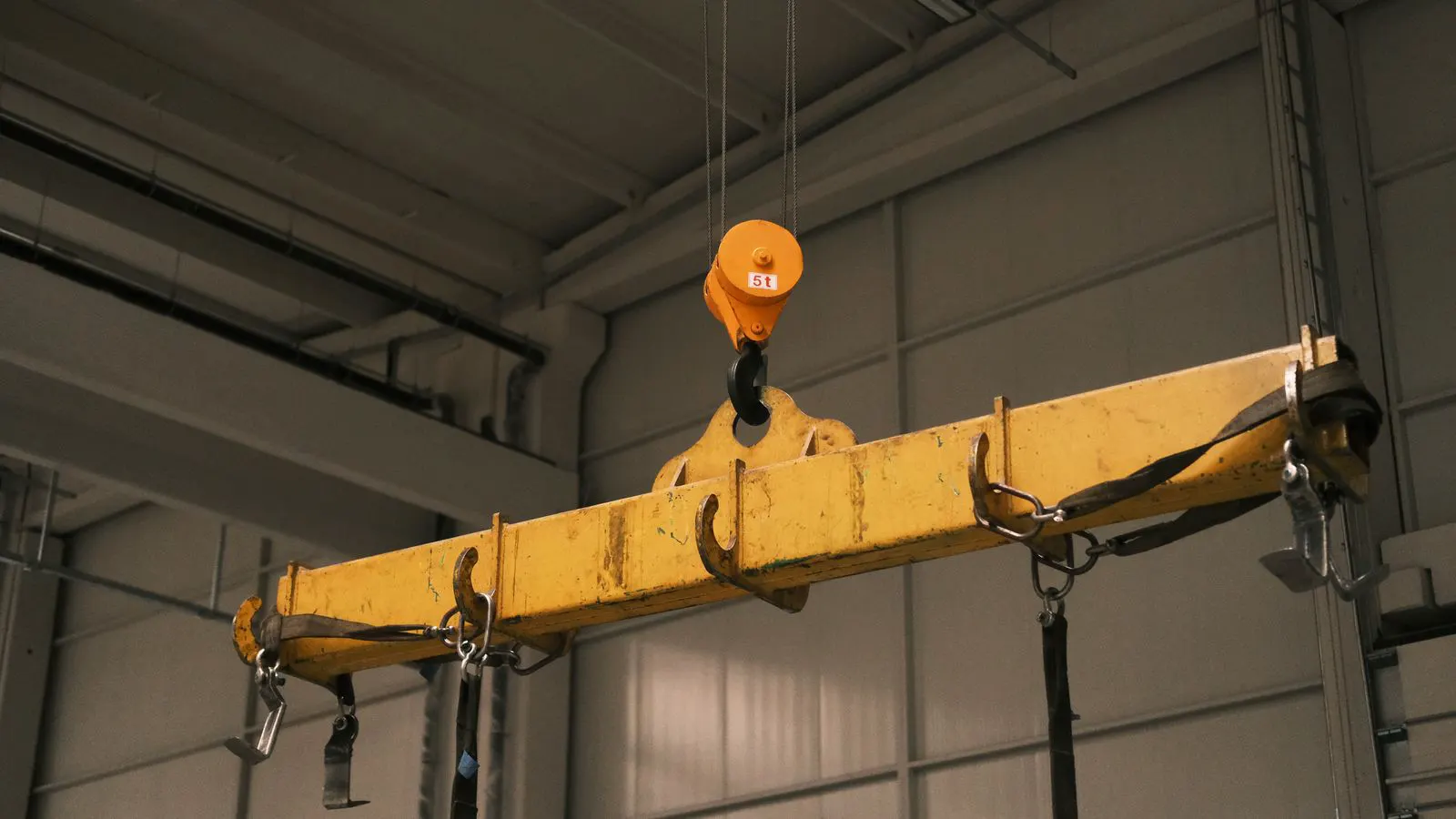
Rigging weight is the combined mass of all the components between the hook and the load. This includes wire rope slings, synthetic webbing, chain slings, shackles, hooks, and spreader beams. A simple single sling may add a small amount of mass. A complex rig with multiple legs and a heavy spreader beam can add a significant amount.
This reduction is direct and mechanical. If a crane can lift a total of ten tonnes at a given radius, and the rigging weighs one tonne, the load itself can only be nine tonnes. The crane does not know the difference between a steel beam and a sling. It only feels the total force on the hook.
The reduction matters most on long-radius lifts. At larger radias, the crane’s available capacity drops. The rigging weight becomes a larger proportion of the remaining capacity. A small reduction in load at a short radius is often manageable. A similar reduction at a long radius can push a lift over the limit.
This is why rigging weight must be calculated before the lift. The rigging plan should list every component and its mass. The load chart value at the planned radius is then reduced by the total rigging mass. If the resulting figure is below the load’s mass, the lift cannot proceed as planned.
How sourcing decisions change when rigging weight is considered
Sourcing a tower crane is not just about buying the largest machine. Buyers often look at the maximum capacity at a short radius. This number can be misleading if the typical lifts are at longer radii. The more relevant figure is the capacity at the radius where the material actually lands.
When rigging weight is considered, the choice of crane size can shift. A smaller crane may handle a load if the rigging is kept light. A larger crane may be needed if the rigging is heavy and the radius is long. This is a sourcing decision, not just an operational one.
Rigging gear also affects sourcing. A site that uses heavy steel beam lifts may need a crane with higher capacity to offset the mass of the spreader beams. A site that uses light synthetic slings for concrete blocks may get away with a smaller crane. The rigging system and the crane must be selected together.
The load chart must be checked against the actual rigging configuration. If a crane is specified for a project based on a standard rigging setup, but the site changes to heavier chain slings, the capacity drops. This can force a re-evaluation of the crane choice or a change in the lift method.
How to calculate the reduction in plain words
The calculation is simple. Take the crane’s rated capacity at the planned radius. Add up the mass of every rigging component that will be suspended from the hook. Subtract that total from the rated capacity. The result is the maximum mass of the load itself.
If the load is heavier than that result, the lift is not safe. The options are to reduce the radius, use lighter rigging, or use a larger crane. In some cases, the load must be split into smaller pieces. This is a common solution on building sites where material delivery is scheduled in stages.
The calculation must be done for every lift, not just the first one. Wind speed changes can reduce capacity. The load chart may show derating values for wind. These deratings must be applied before the rigging weight is subtracted. The order of operations matters. Start with the rated capacity, apply wind derating if required, then subtract rigging weight.
The rigging weight must be accurate. A sling tag may show the mass of the sling itself. The shackles and hooks add more. A spreader beam can be quite heavy. The total must be measured or taken from the manufacturer’s data. Guessing is not acceptable. The numbers must be known before the lift begins.
A worked example using plain words
Imagine a tower crane on a building site. The load chart shows a capacity of twelve tonnes at the planned radius. The lift is for a steel beam. The beam weighs ten tonnes. The rigging plan uses a spreader beam and four wire rope slings, plus the shackles and the hook.
The spreader beam weighs two tonnes. Each wire rope sling weighs one tonne, so four slings total four tonnes. The shackles and hook together weigh half a tonne. The total rigging weight is six tonnes.
Subtract the rigging weight from the crane’s capacity. Twelve tonnes minus six tonnes leaves six tonnes. The crane can only lift a load of six tonnes with this rigging setup. The beam is ten tonnes. This lift cannot proceed.
The team has options. They can use a lighter rigging setup with two slings and a smaller spreader beam. This might reduce the rigging weight to two tonnes, leaving ten tonnes of available capacity. The beam would then fit within the limit. Alternatively, they can move the crane’s jib to a shorter radius if the design allows. This increases the rated capacity. In both cases, the rigging weight is the key variable that must be managed.
Common mistakes that erode safe lifting capacity
The most common mistake is ignoring the mass of the rigging. Operators and planners often focus on the load only. They check that the beam weight is under the rated capacity. They forget that the rigging adds to that mass. This can lead to an overloaded crane.
Another mistake is using rigging gear that is heavier than necessary. A site may default to heavy chain slings because they are durable. This is fine for some lifts. For others, synthetic webbing or lighter wire rope may be sufficient and would free up capacity. The rigging choice should be part of the lift plan, not an afterthought.
Wind derating is another area where capacity is lost. If the load chart shows a reduction at a certain wind speed, that reduction must be applied. If the rigging weight is then subtracted, the available capacity drops further. A lift that was safe in calm conditions may become unsafe when the wind picks up.
Finally, there is the mistake of not updating the rigging weight for changes. If a load is added to the beam during the lift, the total mass increases. If a sling is replaced with a heavier one, the rigging weight changes. The lift plan must be reviewed. The calculation must be redone. Static numbers are not enough. The lift must be managed dynamically.
How to manage lifting capacity and rigging weight on site
Management starts with the lift plan. Every lift plan should include the load mass, the rigging components, and their combined weight. The planned radius and wind conditions should be noted. The available capacity after derating and rigging subtraction should be stated clearly. If the load exceeds that figure, the plan must be revised before work begins.
The crane operator and the rigger must agree on the final configuration. The operator knows the crane’s behavior. The rigger knows the rigging gear. Together they can verify that the setup is safe. This is not a paperwork exercise. It is a practical check before the hook moves.
On the site, the rigging weight should be kept as low as possible without compromising safety. Lighter slings reduce the mass on the hook. Smaller shackles add less. A well-designed rig can be both safe and efficient. This is a matter of planning and selection, not just compliance.
The load chart is the final authority. No matter how light the rigging is, the crane cannot be pushed beyond its rated capacity. The load chart reflects the structural limits of the machine. Exceeding it risks instability, fatigue failure, and catastrophic collapse. The calculation must always respect that limit.
The interplay between lifting capacity and rigging weight is a practical reality on every tower crane site. It is not a theoretical concern. It is a daily calculation that determines whether a lift can proceed. Buyers, planners, and operators all have a role in managing this relationship. The crane must be sized correctly. The rigging must be chosen with its mass in mind. The lift plan must reflect both. Only then can the work be done safely and efficiently.
Frequently asked questions
What is the difference between lifting capacity and rigging weight?
Lifting capacity is the total mass a crane can safely lift at a given radius. Rigging weight is the mass of the slings and shackles added to the load. Rigging weight subtracts from the available capacity.
Does rigging weight matter for small loads?
It does. Even on small lifts, the rigging adds mass to the total. For very light loads, the reduction may be small. For heavier loads or long-radius lifts, the reduction can be significant.
Can I use heavier rigging to increase safety?
Heavier rigging can be safer in terms of strength, but it reduces the available lifting capacity. The choice must balance rigging strength against the crane's load limits. The lift plan must account for the mass.
How do I know the rigging weight for a lift?
Check the manufacturer's data for each sling, shackle, and hook. Add up the mass of every component suspended from the hook. The total is the rigging weight. This must be calculated before the lift begins.
Does the load chart include rigging weight?
No. The load chart shows the maximum total mass the crane can lift at a given radius. The rigging weight must be subtracted from that figure to find the maximum load mass. The chart does not account for the rigging.