Rough Terrain Mobile Cranes vs Tower Cranes for Building Sites

Rough terrain mobile cranes suit flexible, short-duration lifting on uneven ground, while tower cranes dominate long projects with high, repetitive lifting. Procurement managers must weigh mobility, setup time, capacity, and site access to select the correct crane type for each phase.
- Rough terrain mobile cranes offer fast setup and repositioning but have limited lifting capacity compared to tower cranes.
- Tower cranes provide sustained high-capacity lifting over long project durations and require dedicated erection and dismantling time.
- Site access, ground conditions, and lifting patterns determine which crane type performs better on a specific building project.
- Many projects use both crane types during different phases to balance speed, capacity, and cost.
What is the core difference between these two crane types?
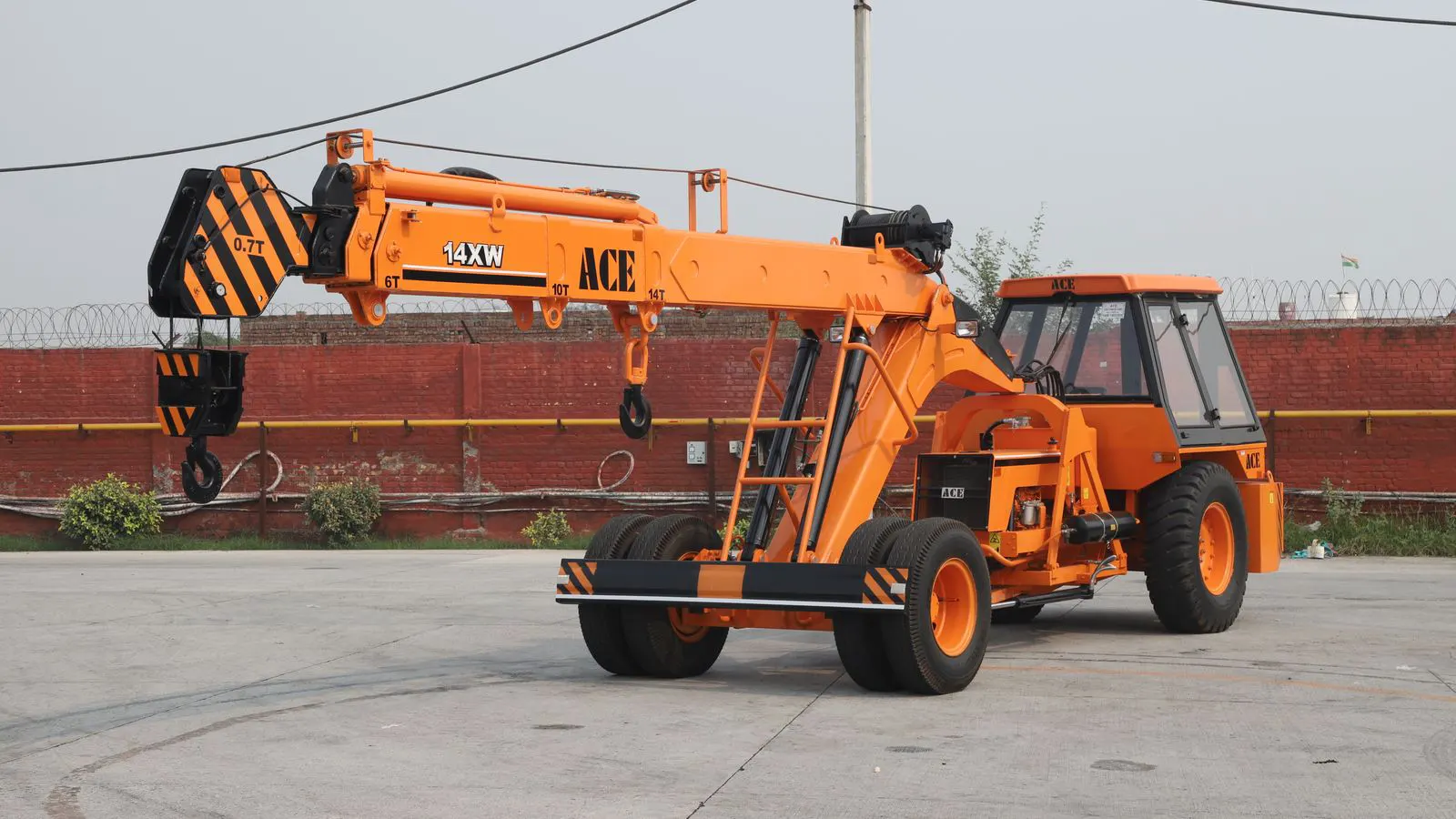
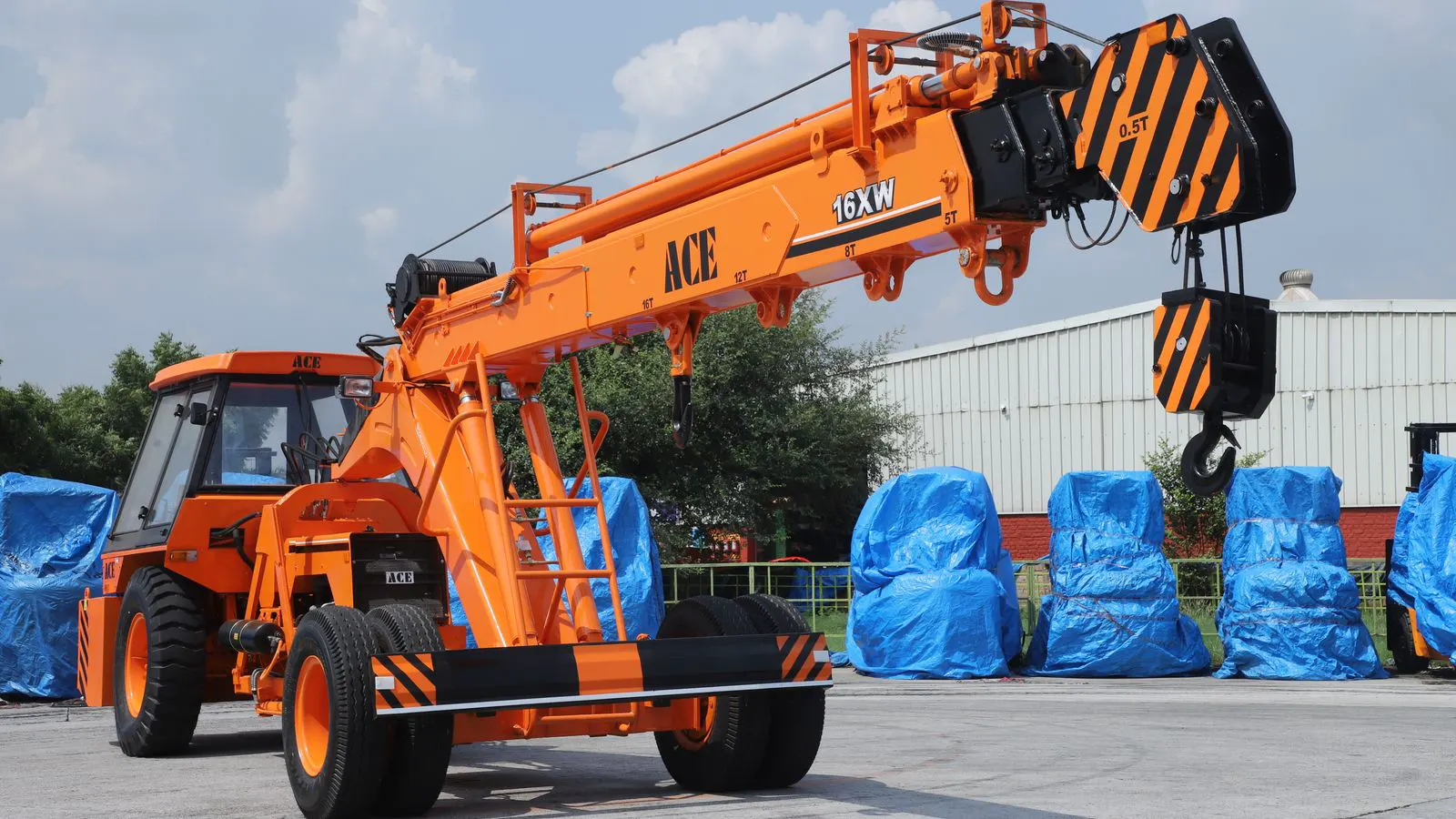
Rough terrain mobile cranes use rubber or steel tires on a tracked or wheeled chassis. They move across the site, park, and begin lifting within a short window. Tower cranes are erected on a concrete foundation or ballast, then remain fixed in one location for the life of the project. The first is a transportable machine. The second is a permanent structure during construction.
This distinction drives every procurement decision. A procurement manager comparing rough terrain mobile cranes vs tower cranes must look beyond payload charts. The question is not just what each machine can lift, but how it fits the project timeline, site constraints, and daily operational rhythm.
How do capacity and lifting radius compare?
Tower cranes typically handle larger loads at greater heights. They are designed for repetitive vertical lifting of steel, concrete, and large panels. Their jib extends over the structure, allowing loads to be placed on upper floors with minimal repositioning.
Rough terrain mobile cranes offer useful capacity in the low to mid range. Their boom length and counterweight setup define the working envelope. At full extension, payload drops significantly. A mobile crane that lifts a heavy load close to the truck may struggle at a long radius.
For site lifting, this means a tower crane can often place a heavier element on a higher floor while a mobile crane handles lighter, closer work. If the project requires moving multi-ton steel sections repeatedly, the tower crane usually wins on efficiency. If the work involves intermittent lifting of machinery, formwork, or smaller loads, the mobile crane may be sufficient.
| Option | Best for | Limitations |
|---|---|---|
| Rough Terrain Mobile Crane | Short projects, uneven ground, repositioning, tight access | Limited capacity at long radius, slower repeated lifts, no high-rise reach |
| Tower Crane | Long projects, high structures, repetitive heavy lifting | Fixed position, slow erection, requires stable foundation |
| Crawler Crane | Heavy lifting on soft ground, long-term static work | Slow repositioning, high transport cost, limited on-site mobility |
| Luffing Tower Crane | High-rise sites with restricted space | Higher cost, specialized erection, limited capacity at max height |
| Hydraulic Mobile Crane | Frequent repositioning, complex angles | Lower stability than crawler, requires careful outrigger setup |
How does setup time affect the project schedule?
Erection of a tower crane is a major event. Crews assemble the mast, install the jib, and test the machine. This takes days, sometimes weeks, depending on crane size and site conditions. Dismantling at project end adds more time and labor.
A rough terrain mobile crane arrives, parks, lowers outriggers, and lifts. Setup can take hours. If the project schedule is tight or if lifting needs shift location, this speed matters.
Many building projects start with a mobile crane for early works. Foundations, utilities, and lower floors may not yet justify a tower crane. As the structure rises and lifting frequency increases, the mobile crane may be replaced by a tower crane. Procurement teams often stage both types to avoid schedule gaps.
What are the site access and ground conditions like?
Tower cranes need a level, reinforced base. The foundation must support significant loads. If the site is uneven, soft, or has restricted access, erection becomes difficult and costly.
Rough terrain mobile cranes tolerate uneven ground better than tower cranes, but not as well as tracked machines. They rely on outriggers and level pads. If the ground is too soft or the access road is narrow, even a mobile crane may struggle.
For site lifting in constrained urban areas, access routes are the bottleneck. A tower crane may require a large footprint for erection. A mobile crane can often enter through smaller gates and reposition within the building envelope.
How do operating costs and labor requirements differ?
Tower cranes need dedicated operators and maintenance. They consume energy for hoisting and slewing, but their fixed position reduces fuel use compared to mobile machines. They also require regular inspections of the mast, jib, and hoist system.
Rough terrain mobile cranes use diesel for movement and lifting. They need tire or track maintenance, hydraulic system checks, and operator familiarity with outrigger placement.
Labor costs vary by region and project complexity. Tower crane operators often work shifts, while mobile crane operators may be called in for specific lifts. Procurement managers should model the total cost of ownership, including transport, erection, fuel, maintenance, and labor.
When should a procurement manager choose a tower crane?
A tower crane is the right choice when the project is long, the structure is high, and lifting is repetitive. If the site has stable ground and the crane can be erected early, it will provide consistent capacity for steel erection, concrete placement, and material handling.
Consider a tower crane when:
- The project duration exceeds six months.
- The building height requires lifting beyond mobile crane reach.
- Lifting frequency is high, with daily multiple heavy lifts.
- The site has space for erection and dismantling.
- The budget allows for longer setup time in exchange for lower per-lift cost.
When should a procurement manager choose a rough terrain mobile crane?
A rough terrain mobile crane suits projects with shorter durations, variable lifting locations, or difficult access. If the building is low-rise or the lifting needs are intermittent, the mobile crane may be more economical.
Consider a rough terrain mobile crane when:
- The project duration is less than six months.
- Lifting locations change frequently.
- The site has uneven ground or limited space for a tower foundation.
- The lifting loads are within the mobile crane capacity range.
- Fast mobilization is required to meet a tight schedule.
What about hybrid approaches for complex sites?
Many building projects use both crane types during different phases. Early works may rely on a mobile crane for site preparation and lower-level lifting. As the structure rises, a tower crane takes over for heavy, repetitive lifts. The mobile crane may remain for specialized or infrequent lifts that the tower crane cannot reach.
This hybrid approach reduces idle time and optimizes cost. Procurement teams should map lifting requirements by phase and match each phase to the crane type that performs best. A lifting plan helps define which crane handles which loads, and when.
What common mistakes should buyers avoid?
Buyers often select a crane based on maximum capacity alone. They ignore radius, height, and site constraints. A crane that can lift a heavy load at short range may be useless for the actual work.
Another mistake is underestimating erection time. Tower crane mobilization can delay the project if not scheduled correctly. Mobile crane transport costs can also add up if the machine moves frequently.
Buyers should review the lifting plan before finalizing the crane type. They should consult with the crane supplier and the site engineer to confirm that the chosen machine fits the project. A pre-use crane safety checklist and a clear lifting plan reduce the risk of operational failures.
How do tower crane capacity charts compare with mobile crane charts?
Capacity charts for both crane types show payload versus radius. For tower cranes, the chart often includes multiple jib configurations and height settings. For mobile cranes, the chart depends on outrigger configuration, boom angle, and counterweight setup.
A tower crane capacity chart is not enough for heavy lifting without considering the specific configuration. A mobile crane chart must account for the ground conditions and the exact outrigger pad setup. Buyers should use the charts as a starting point, then verify with a site-specific lift calculation.
The choice between rough terrain mobile cranes vs tower cranes is not a simple capacity comparison. It is a match between the crane type and the project’s operational reality.
Frequently asked questions
Can a rough terrain mobile crane replace a tower crane on a high-rise project?
No. A mobile crane cannot match the height and repeated heavy lifting capacity of a tower crane. It may handle lower-level or specialized lifts, but it cannot serve as the primary crane for high-rise construction.
How long does it take to erect a tower crane?
Erection time depends on crane size and site conditions. It can take several days to several weeks. Dismantling at project end adds additional time and labor.
What is the main advantage of a rough terrain mobile crane?
Its mobility and fast setup. It can reposition quickly and begin lifting without a dedicated foundation, making it suitable for short projects or uneven sites.
When is a tower crane more cost-effective?
On long projects with high lifting frequency. The lower per-lift cost and sustained capacity make it more economical over time.
Do I need both crane types on one site?
Not always. Many projects use one type based on their needs. However, hybrid approaches are common when lifting requirements change across different phases of construction.