Why Mobile Crane Outriggs Sink in Soft Soil
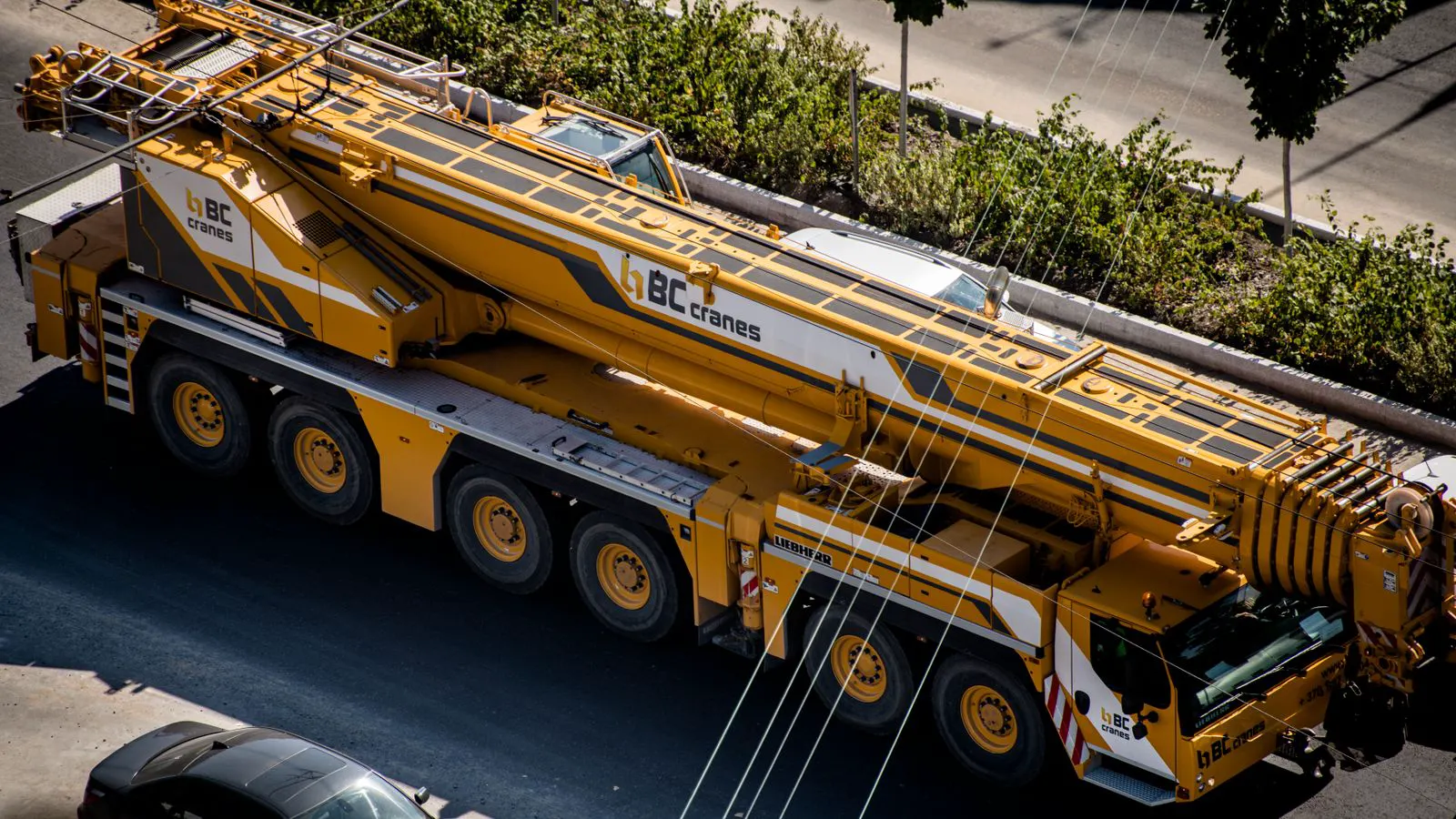
Outriggers sink when soft soil compresses under the crane's weight, shifting load paths and reducing stability. Site supervisors must check ground bearing capacity and use outrigger pads to spread load, preventing tip-overs during mobile crane operations.
- Soft soil compresses under mobile crane loads, causing outriggers to sink unevenly.
- Outrigger pads increase contact area and lower pressure on the ground.
- Ground bearing checks before setup prevent most tip-overs in weak soil.
- Uneven sinking changes the effective working radius and lifting capacity.
- Monitoring for soil movement during lifts is a standard safety practice.
Mobile Crane Outrigger Sinking: Causes, Symptoms, and Prevention
A mobile crane is designed to work on prepared ground. When the operator lowers the outriggers into wet mud, clay, or loose fill, the ground may give way. The outrigger foot sinks, the boom angle changes, and the load center shifts. If the sinking is uneven, the crane can tip even if the boom is not fully extended.
What Happens When Soil Compresses
Outriggers transfer the crane’s weight to the ground through a small contact area. A typical outrigger foot might be a square steel plate. That plate presses down on the soil. If the soil is strong, it holds. If the soil is weak, it compresses.
The compression process happens in stages. First, the plate pushes down and the soil particles shift. Next, the soil beneath the plate settles. The plate sinks. The outrigger leg lengthens slightly or the hydraulic cylinder extends to maintain height. The crane body tilts. The operator may not notice the tilt immediately, but the load is now moving through a different path.
Uneven sinking is the most dangerous scenario. If one outrigger sinks two inches and the opposite outrigger sinks one inch, the crane sits on a slope. The center of gravity moves toward the higher side. The load is now further from the stable base. The effective lifting capacity drops.
Consider a typical steel erection site. The crane is set up on compacted gravel. The operator lowers the outriggers. The boom is fully extended to pick up a beam. The load is heavy, but the ground seems fine. Then, a rain shower passes through. The gravel beneath one outrigger becomes saturated. The soil particles lose friction. The outrigger foot drops two inches while the opposite foot remains stable. The crane tilts. The load swings slightly as the operator corrects the boom angle. The load moment indicator shows a higher percentage than expected. The operator stops the lift. The ground has changed, and the crane is no longer in the safe setup position.
Outrigger Sinking vs. Ground Failure
There is a difference between an outrigger sinking and the ground failing. Sinking is a gradual compression of the soil. The leg stays in the same position relative to the crane, but the ground level drops. Ground failure is a sudden collapse. The soil shears and the outrigger drops quickly, sometimes with a loud crack or a visible break in the surface.
Sinking is often a warning sign. Ground failure is an emergency. Both require immediate action. If you see an outrigger sink slowly, stop the lift. If you see a sudden drop, clear the area.
Sinking gives the operator a chance to react. The crane may still be stable, but the geometry has changed. The operator can lower the load, re-check the level, and decide whether to proceed. Ground failure offers no such chance. The ground has lost its ability to support the load. The crane may tip before the operator can react. The difference is critical. One is a problem to be solved. The other is a hazard to be avoided.
Common Symptoms of Outrigger Sinking
Operators often miss the early signs because the crane looks stable from a distance. The symptoms are subtle but measurable.
| Symptom | Likely cause | What to do |
|---|---|---|
| Outrigger foot visible below the original ground level | Soil compression under load | Stop the lift. Lower the load. Check the ground. |
| Crane body tilts toward the outrigger side | Uneven sinking of opposite legs | Level the crane. Add outrigger pads. Re-check the level. |
| Hydraulic cylinders extend further than usual | Outrigger foot dropping into soft soil | Stop. Inspect the ground. Consider relocating the crane. |
| Load sways or drifts during rotation | Shifting base or changing center of gravity | Stop. Check all four outriggers. Do not rotate until stable. |
| Mud or slurry rising around the pad | Water pressure moving soil particles | Stop. Wait for drainage if possible. Use larger pads. |
The first symptom to watch for is the outrigger foot dropping below the original ground level. The operator may notice this when looking down from the cab. The foot is no longer flush with the ground. It is buried. This is a clear sign of compression. The second symptom is tilting. The crane body shifts toward the sinking side. The operator may feel a change in the crane’s balance. The third symptom is hydraulic extension. The cylinders extend further than expected to keep the crane at the same height. This indicates the ground is dropping beneath the foot.
The fourth symptom is load sway. The load drifts during rotation. This happens because the base is shifting. The center of gravity is moving. The crane is no longer stable. The fifth symptom is mud rising. Water pressure is pushing soil particles aside. This is a sign of saturated soil. The ground is soft and will not support the load.
How to Fix Sinking Outriggers
You cannot “un-sink” a foot that has settled into soft clay. The fix depends on the severity of the sinking and the condition of the ground.
- Stop the lift immediately. Do not raise the load. Do not rotate the crane. Keep the load as low as possible.
- Assess the ground. Look at the mud. Is it wet clay, loose sand, or organic fill? Check the surrounding area for other signs of weakness.
- Use outrigger pads. Place steel or wood pads under the sinking outrigger. The pad must be larger than the original foot to spread the load. If the foot is already sunk, you may need to lift the outrigger slightly, remove the load, and place the pad correctly.
- Check the level. Use a bubble level or the crane’s built-in level. The crane must be level within the manufacturer’s tolerance. If it is not level, the load is unsafe.
- Relocate if necessary. If the ground is too soft for pads, move the crane to firmer ground. Do not assume the current position is safe.
When an outrigger sinks, the first step is to stop. The operator must lower the load to the ground. The crane must not be rotated. The load must not be raised. The operator must assess the ground. The ground may be wet clay, loose sand, or organic fill. Each material behaves differently. Wet clay is cohesive but weak. It may hold a load for a short time, but it will compress over time. Loose sand is granular. It may shift under load. Organic fill is the weakest. It decomposes and loses strength.
Once the ground is assessed, the operator can decide on the next step. If the sinking is minor, outrigger pads may be sufficient. The pads must be larger than the original foot. A standard foot might be 1 by 1 foot. A pad might be 3 by 3 feet. The pad spreads the load over a larger area, reducing the pressure on the soil. If the foot is already sunk, the operator may need to lift the outrigger slightly. The load must be removed. The pad must be placed correctly. The outrigger must be lowered onto the pad.
The operator must then check the level. The crane must be level within the manufacturer’s tolerance. If the crane is not level, the load is unsafe. The operator must re-check the level after placing the pads. If the crane is still not level, the operator must consider relocating the crane. Relocating is often the safest option. The ground may be too soft for pads. The operator must move the crane to firmer ground. The cost of relocation is lower than the cost of a tip-over.
Prevention: Ground Bearing Checks
The best fix is to prevent the sinking before it starts. A ground bearing check is a standard part of mobile crane setup. It involves estimating the weight of the crane, the boom, the load, and the counterweight. It also involves estimating the soil strength.
The basic calculation is simple. Divide the total weight by the area of the outrigger pad. That gives you the pressure in kilopascals or pounds per square inch. Compare that pressure to the soil bearing capacity. If the pressure is higher than the soil can support, the outrigger will sink.
Site supervisors should have a soil test done for critical lifts. A simple field test might involve digging a small hole and checking the material. But for heavy lifts, a geotechnical engineer should review the site.
The ground bearing check is a standard part of mobile crane setup. It involves estimating the weight of the crane, the boom, the load, and the counterweight. It also involves estimating the soil strength. The total weight is the sum of the crane’s operating weight, the boom weight, the load weight, and the counterweight. The soil strength is the bearing capacity of the ground. The bearing capacity is the maximum pressure the soil can support without failing.
The basic calculation is to divide the total weight by the area of the outrigger pad. This gives the pressure. The pressure must be compared to the soil bearing capacity. If the pressure is higher than the bearing capacity, the outrigger will sink. The operator must reduce the load or increase the pad area.
For critical lifts, a soil test is necessary. A simple field test might involve digging a small hole and checking the material. The operator can look at the color, texture, and consistency of the soil. Wet clay is cohesive. Loose sand is granular. Organic fill is dark and soft. For heavy lifts, a geotechnical engineer should review the site. The engineer can determine the soil bearing capacity and recommend the appropriate pad size.
Outrigger Pads and Their Limits
Outrigger pads are the first line of defense. A standard steel pad might be 4 by 4 feet. A larger pad might be 6 by 6 feet or larger. The bigger the pad, the lower the pressure.
However, pads have limits. If the soil is saturated, the pad will sink regardless of size. The soil itself is weak. Water fills the voids between particles, reducing friction. The pad pushes down, and the soil moves aside.
In these cases, you need a different solution. You might need to spread the load over a larger area. This could involve laying down timber mats, concrete slabs, or crushed stone. The goal is to create a stable platform.
Outrigger pads are the first line of defense against ground sinking. They spread the load over a larger area, reducing the pressure on the soil. A standard steel pad might be 4 by 4 feet. A larger pad might be 6 by 6 feet or larger. The bigger the pad, the lower the pressure. The operator must ensure the pad is flat and level. The pad must be placed correctly under the outrigger foot.
However, pads have limits. If the soil is saturated, the pad will sink regardless of size. The soil itself is weak. Water fills the voids between particles, reducing friction. The pad pushes down, and the soil moves aside. In these cases, pads are not sufficient. The operator needs a different solution.
The operator may need to spread the load over a larger area. This could involve laying down timber mats, concrete slabs, or crushed stone. The goal is to create a stable platform. The platform must be strong enough to support the crane’s weight. The operator must calculate the required size and material. The platform must be placed under the outriggers. The outriggers must be lowered onto the platform. The level must be checked.
Monitoring During the Lift
Even with good preparation, ground conditions can change. Rain can soften the soil. Vibration from the engine or the load can shift particles. The operator must watch for movement.
A good practice is to have a spotter watch the outriggers. The spotter should report any change in the ground level. The operator should pause if there is any suspicion. Do not push through a lift if the ground feels unstable.
The crane’s load moment indicator can also help. If the crane is at a high percentage of its rated capacity, it is more sensitive to ground movement. If the ground shifts, the load moment indicator may spike. This is a warning sign.
Monitoring during the lift is a continuous process. The operator must watch for movement. The ground can change. Rain can soften the soil. Vibration from the engine or the load can shift particles. The operator must be alert. The spotter must watch the outriggers. The spotter should report any change in the ground level. The operator should pause if there is any suspicion.
The crane’s load moment indicator can also help. The load moment indicator shows the percentage of rated capacity the crane is using. If the crane is at a high percentage, it is more sensitive to ground movement. If the ground shifts, the load moment indicator may spike. This is a warning sign. The operator must stop the lift and assess the ground.
The operator must not push through a lift if the ground feels unstable. The ground may be soft. The outriggers may be sinking. The crane may be tilting. The operator must stop the lift and re-check the ground.
When to Call It In
Sometimes the ground is just too bad. You need to know when to stop. If the outriggers sink more than a few centimeters, the crane is not safe. If the pads are not enough, the site is not ready.
Do not try to “make it work” with a lighter load. The structural limits of the crane are based on a stable base. A soft base changes the physics. You cannot simply reduce the load to compensate for a sinking outrigger.
The cost of a tip-over is far higher than the cost of a delay. Move the crane. Prepare the ground. Do the lift.
When to call it in is a decision that must be made quickly. The ground may be too bad. The outriggers may be sinking. The pads may not be enough. The operator must know when to stop. If the outriggers sink more than a few centimeters, the crane is not safe. If the pads are not enough, the site is not ready.
Do not try to “make it work” with a lighter load. The structural limits of the crane are based on a stable base. A soft base changes the physics. You cannot simply reduce the load to compensate for a sinking outrigger. The crane’s safety depends on the ground. If the ground is soft, the crane is not safe.
The cost of a tip-over is far higher than the cost of a delay. The operator must move the crane. The ground must be prepared. The lift must be done. The operator must not take risks. The crane must be on stable ground. The load must be safe. The operator must make the right decision.
Final Thoughts
Mobile crane outriggers sink when soft soil compresses under load. The process is gradual but dangerous. Uneven sinking tilts the crane and reduces lifting capacity. Site supervisors must check ground bearing before setup. Outrigger pads help, but they are not a magic fix for saturated soil.
If you see an outrigger sink, stop the lift. Check the ground. Use pads if necessary. Relocate if the ground is too weak. Prevention is cheaper than a tip-over. Always assume the ground is soft until you have proof otherwise.
Frequently asked questions
Can you drive the mobile crane back onto the sunk outrigger to lift it?
No. Driving the crane onto a sunk outrigger can damage the chassis and the outrigger leg. It also shifts the center of gravity unpredictably. Stop the lift and use a separate recovery vehicle if needed.
How much can a standard outrigger pad reduce the pressure on the soil?
A standard pad might double or triple the contact area of the outrigger foot. This reduces the pressure by half or a third. The exact reduction depends on the pad size and the original foot size.
Is it safe to use wooden mats instead of steel pads?
Yes, if they are thick and strong enough. Wood is lighter and cheaper than steel, but it is more susceptible to rot and splitting. Check the load rating of the mats. Use them only for the intended weight.
What if the ground is wet but not muddy?
Wet soil is weaker than dry soil. The water fills the voids and reduces friction. You should still do a ground bearing check. If the soil is soft, use larger pads or relocate.
Can you use hydraulic outrigger extensions to compensate for sinking?
No. Hydraulic extensions lengthen the outrigger leg. They do not fix the ground. If the ground is sinking, extending the leg just lifts the crane higher. The instability remains.